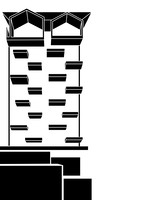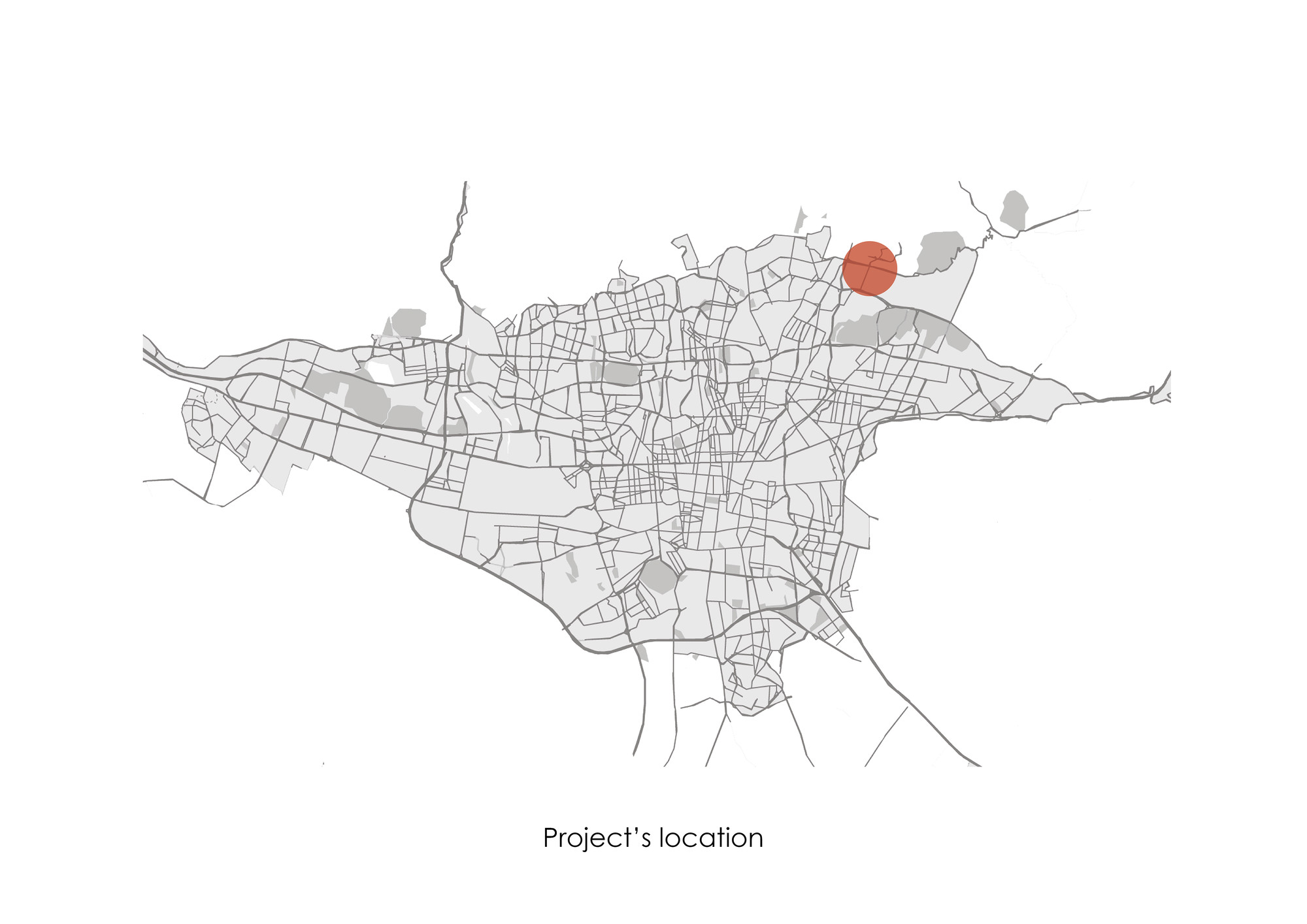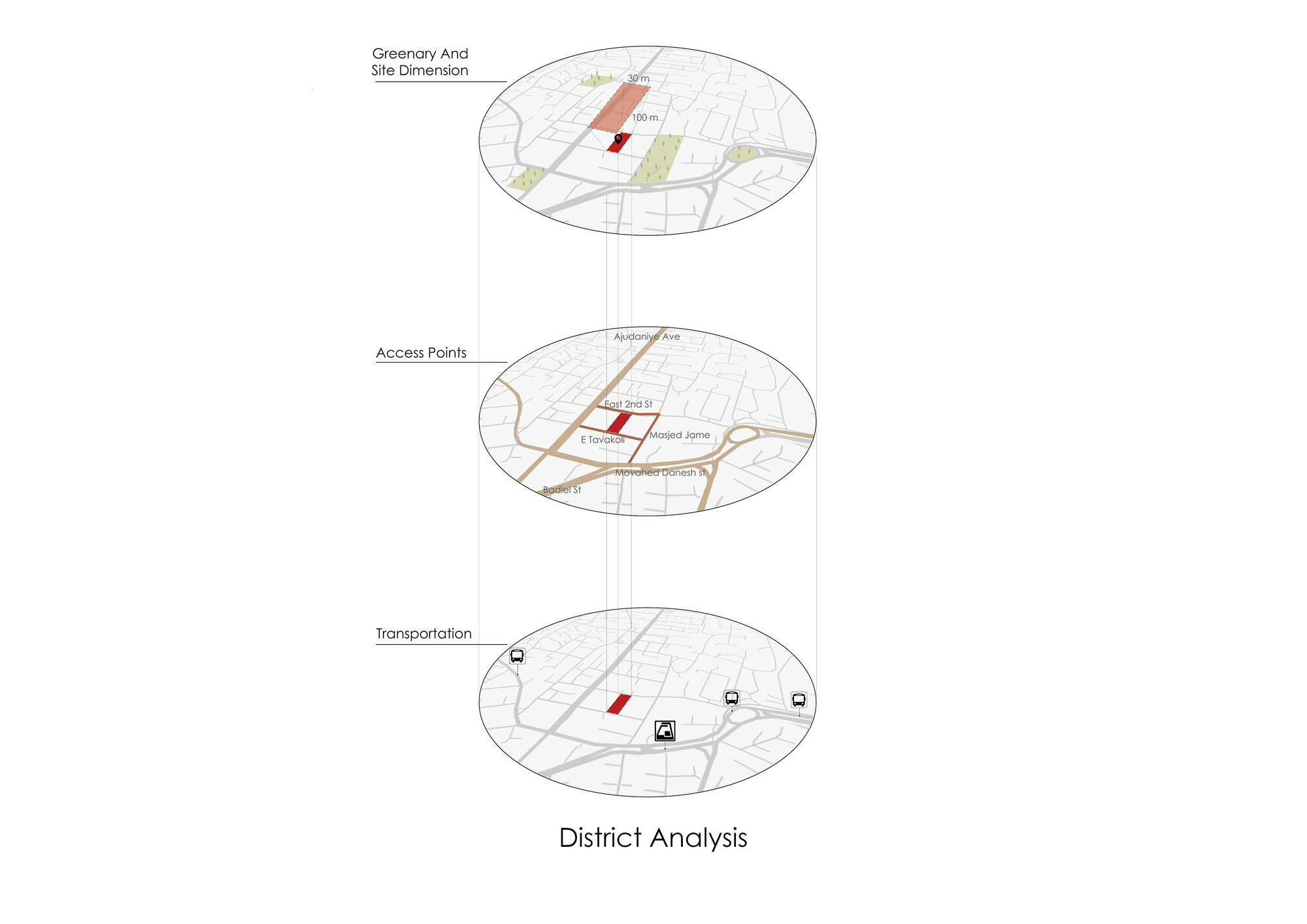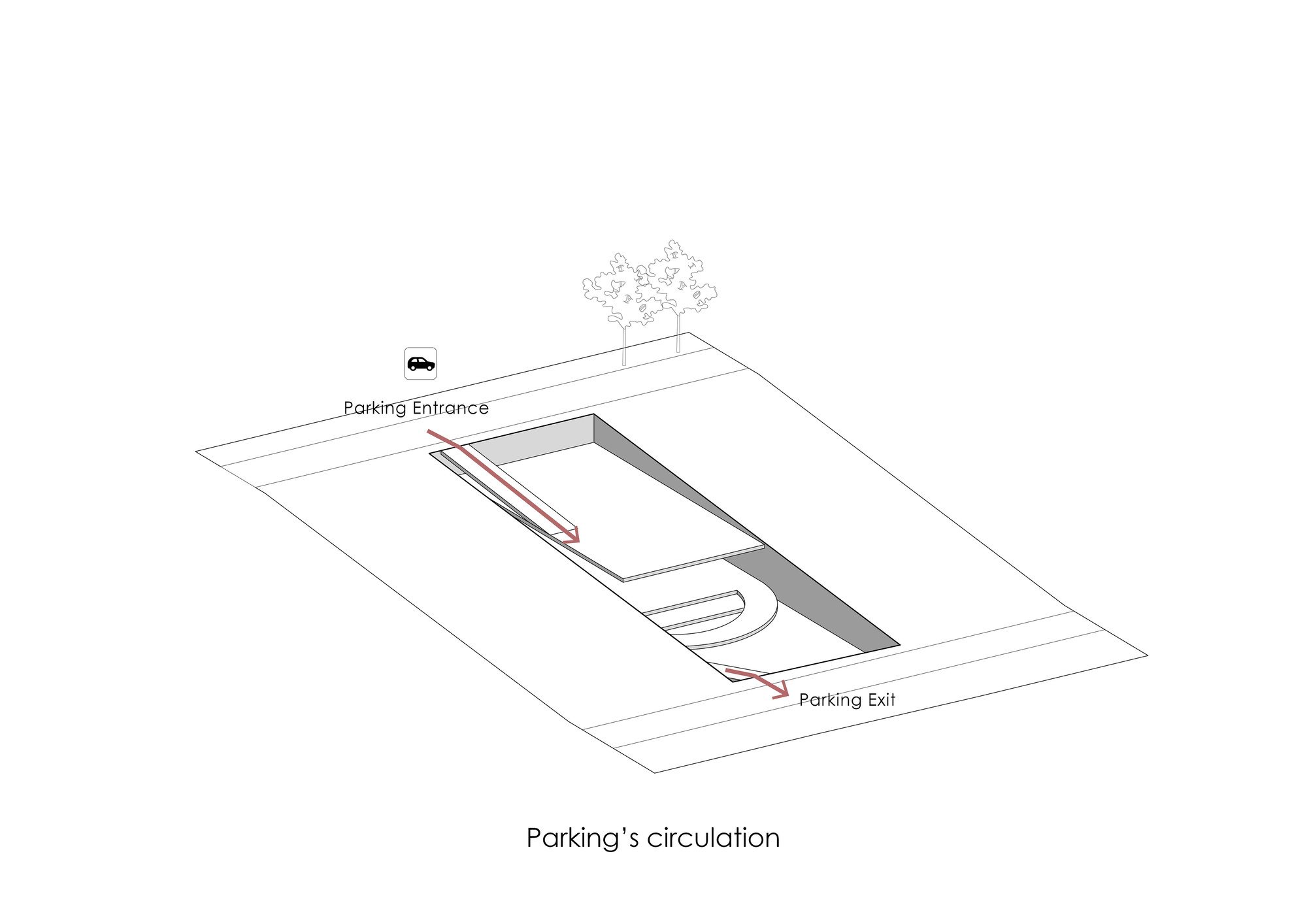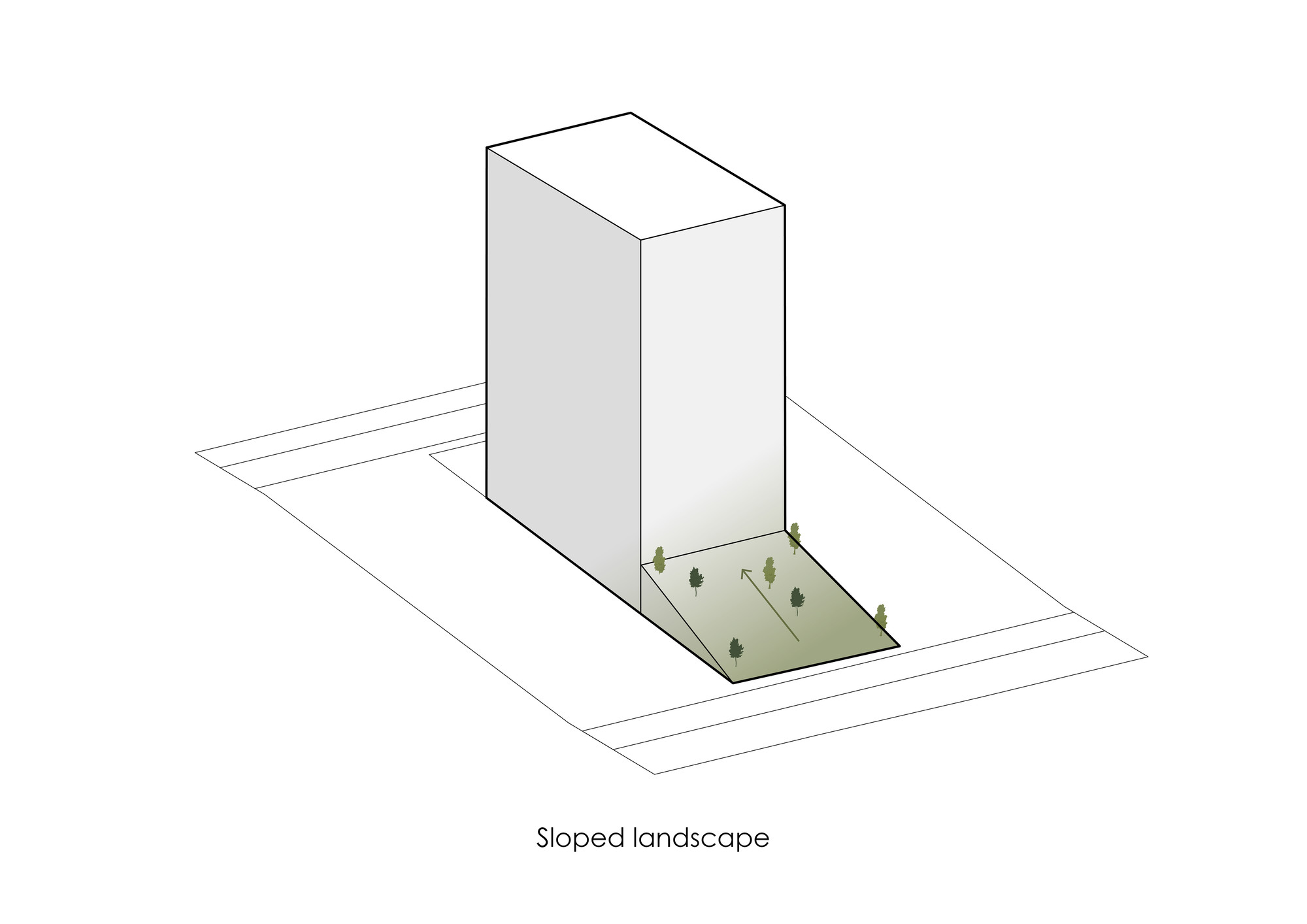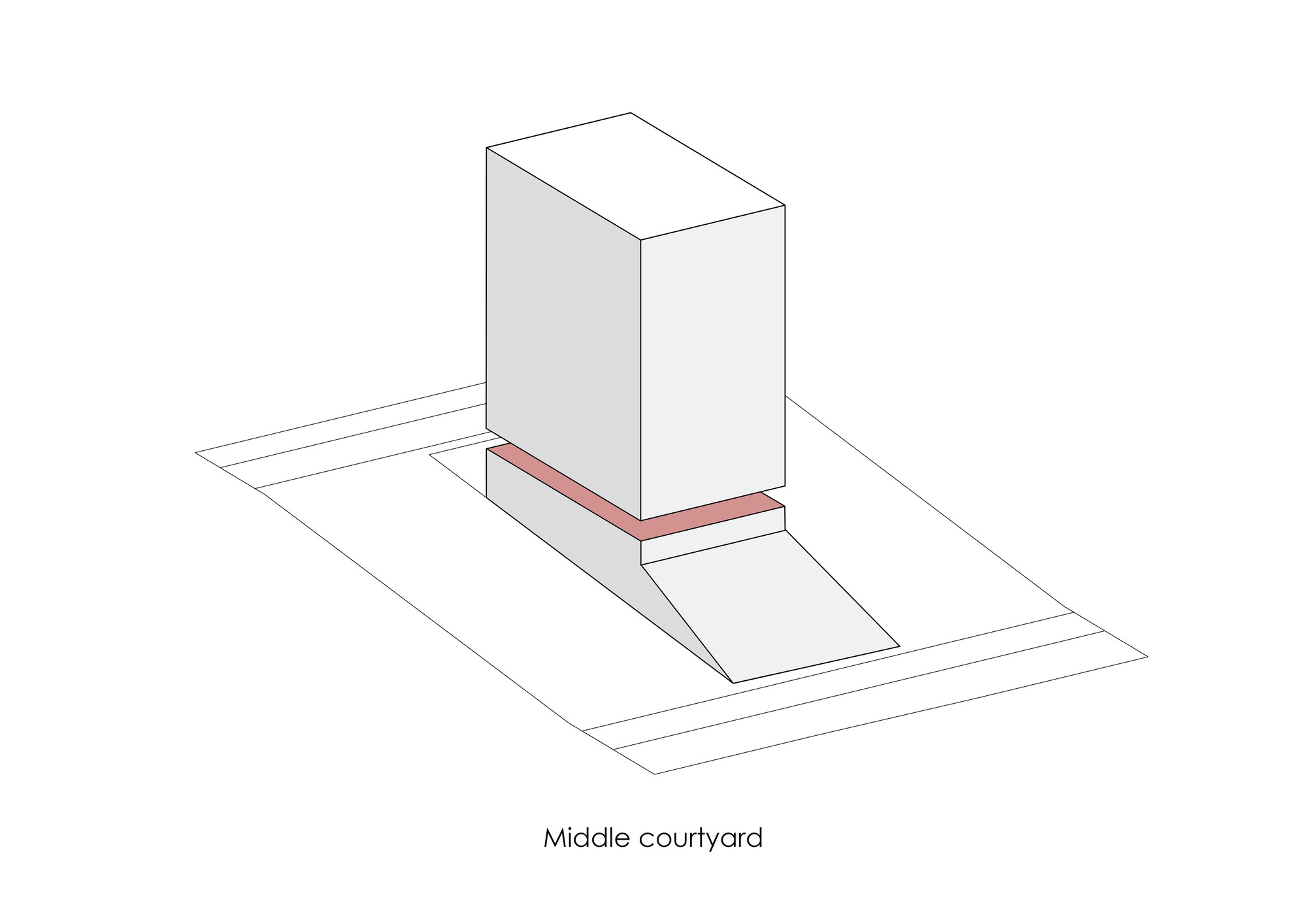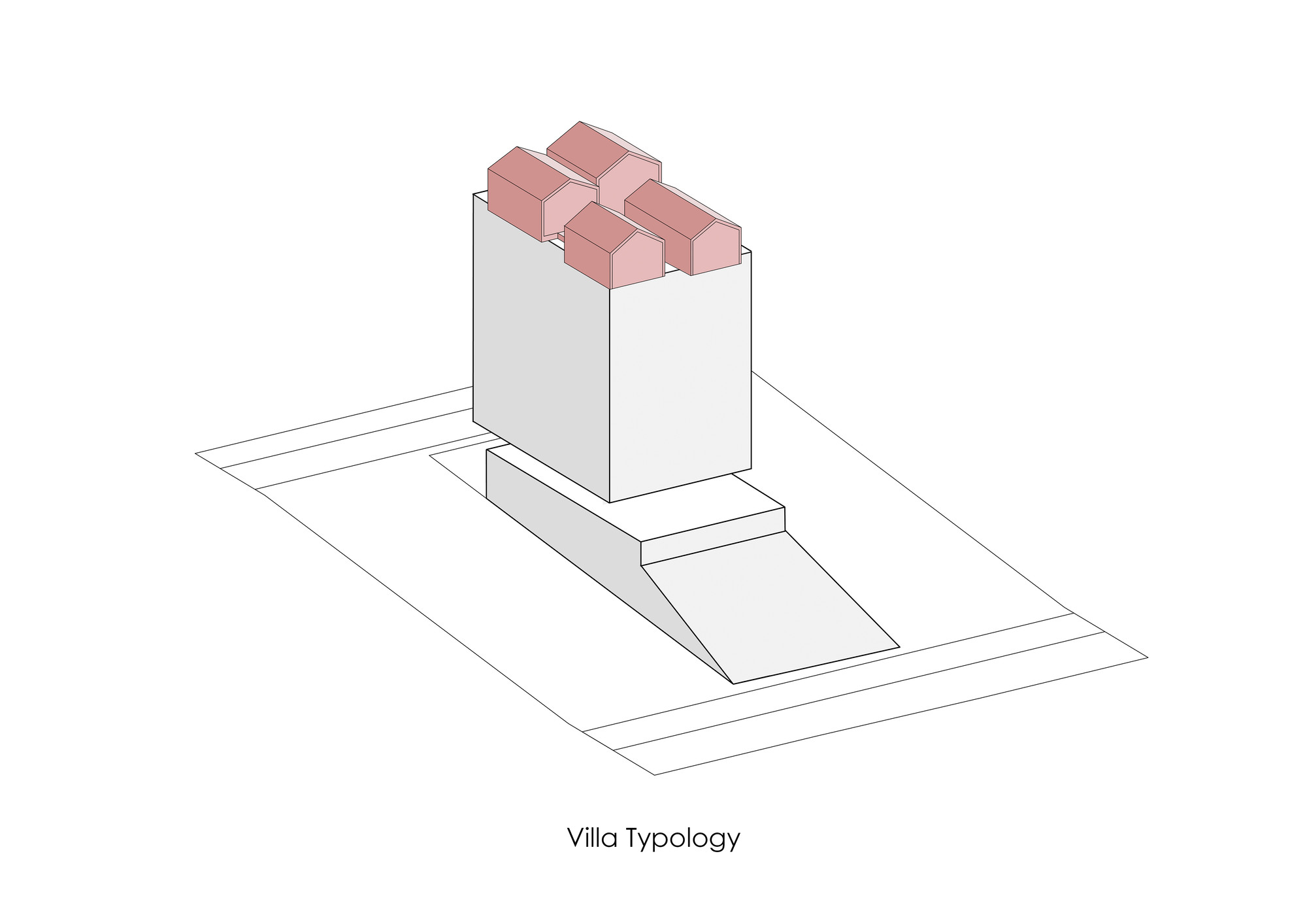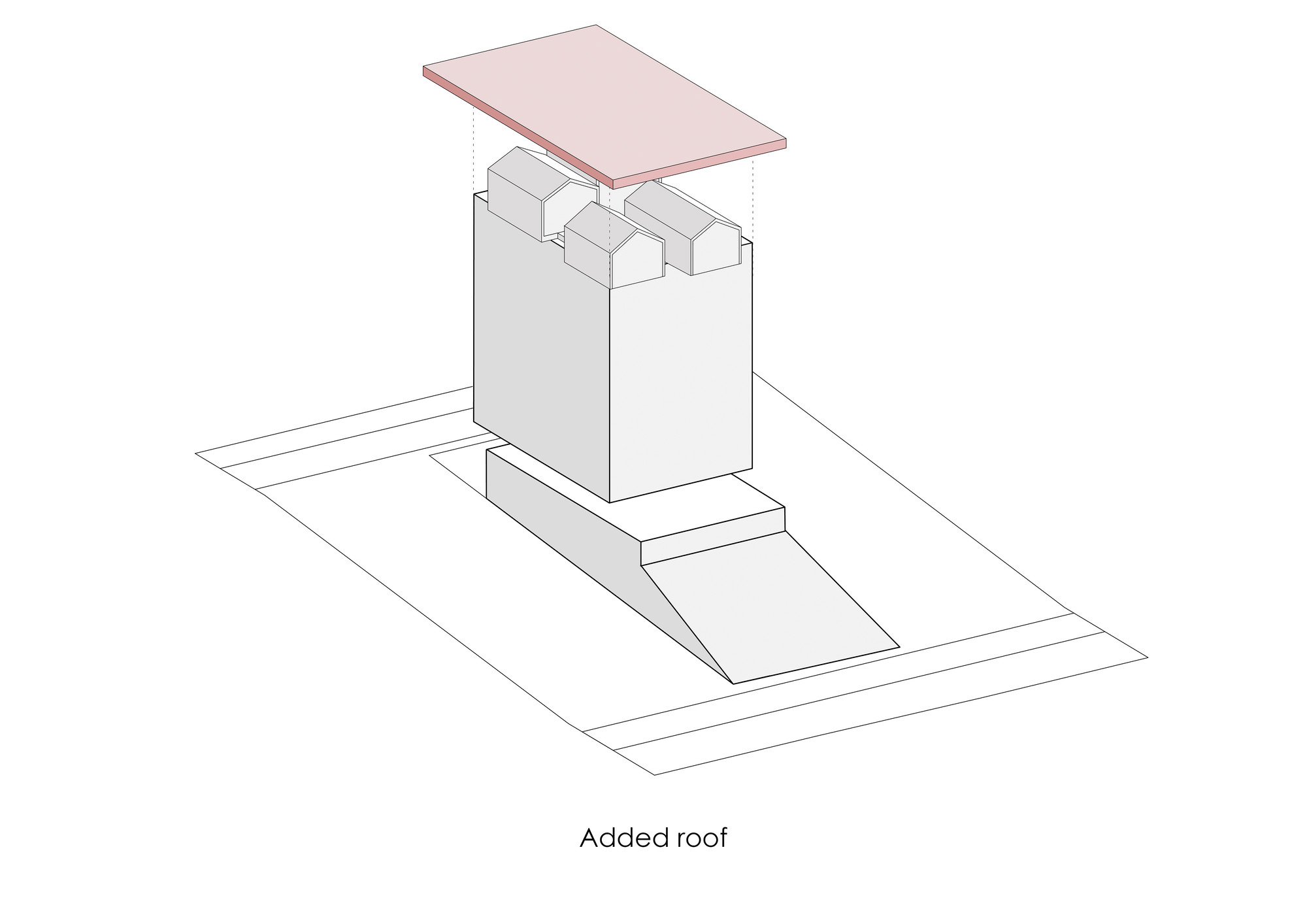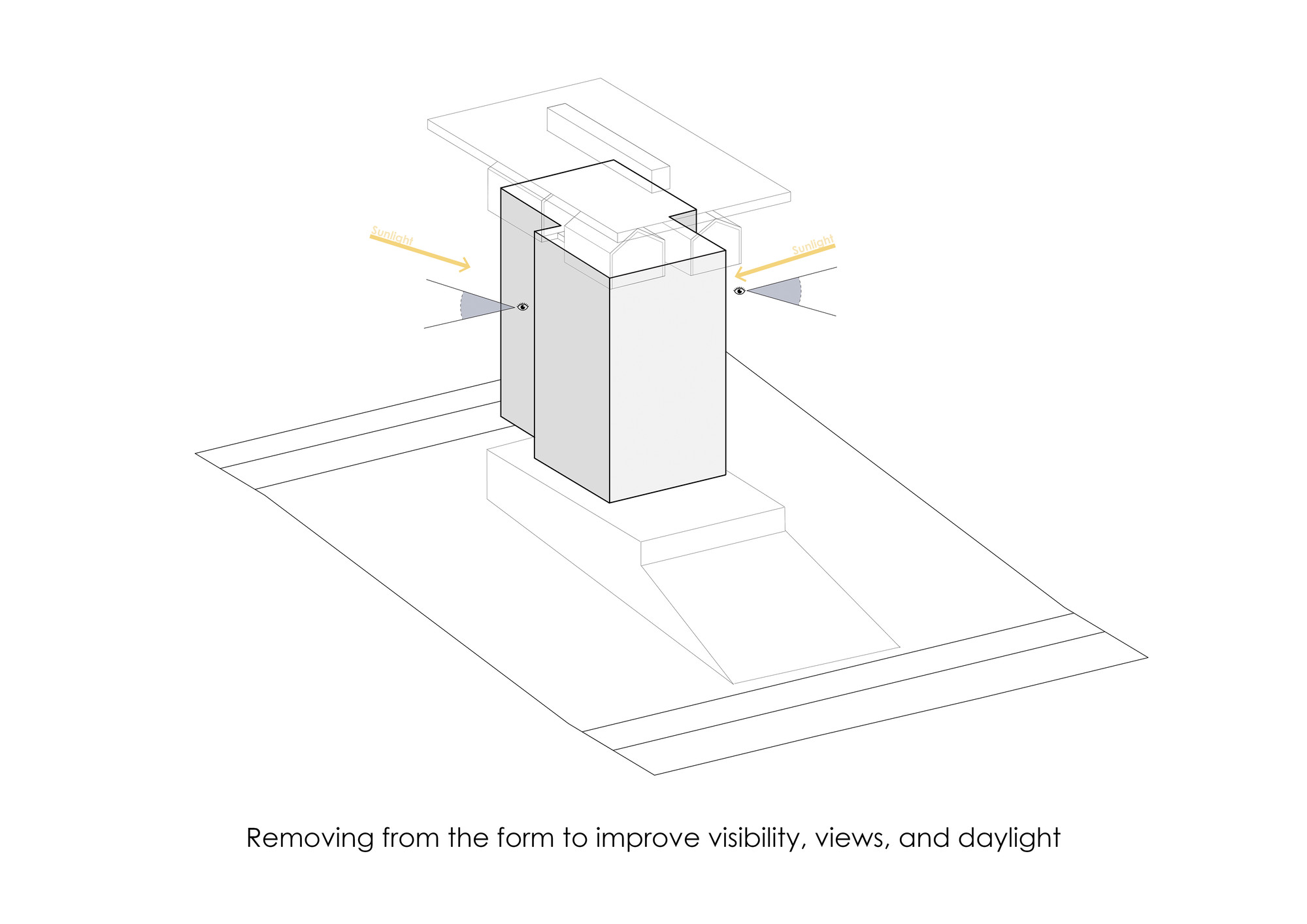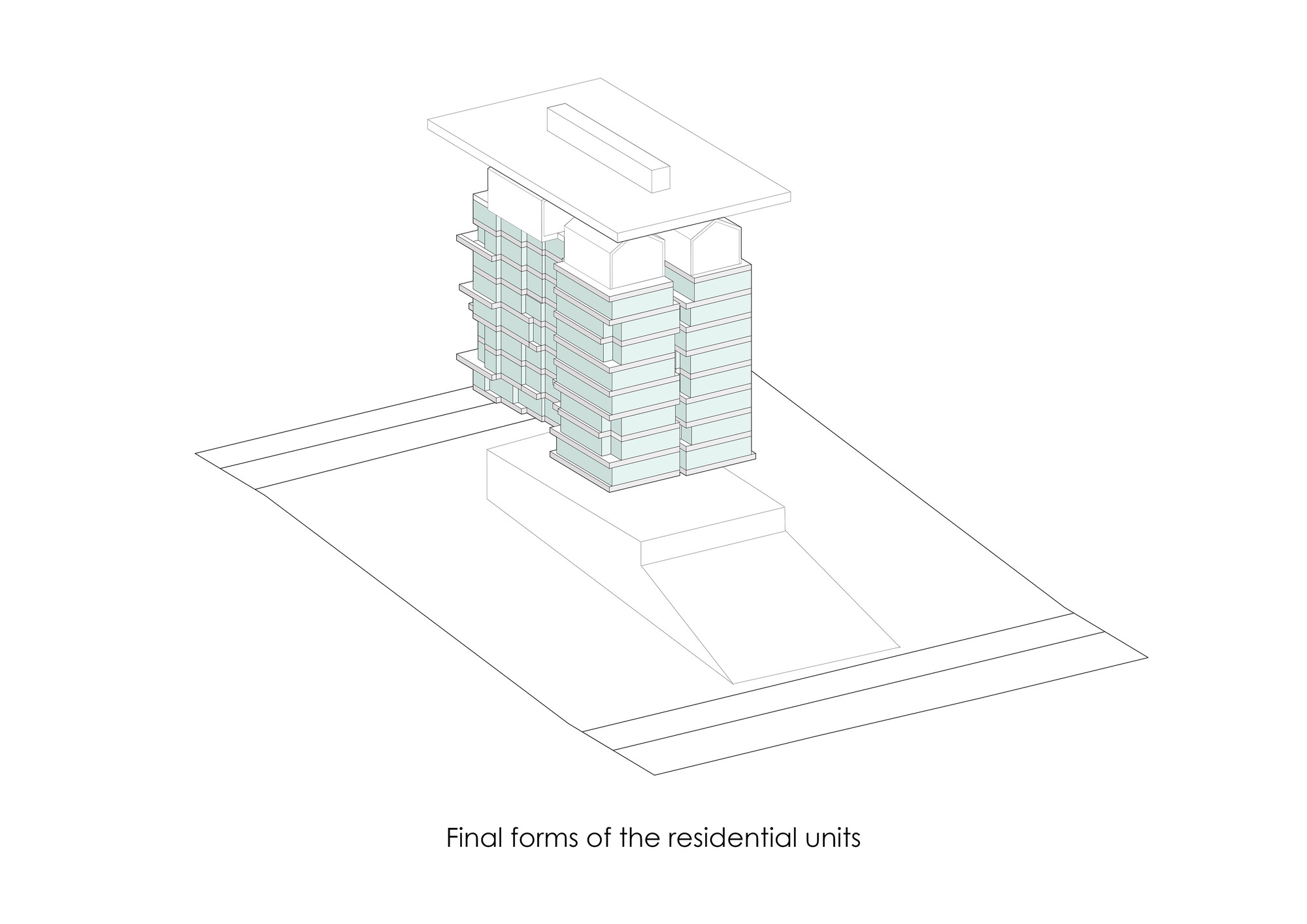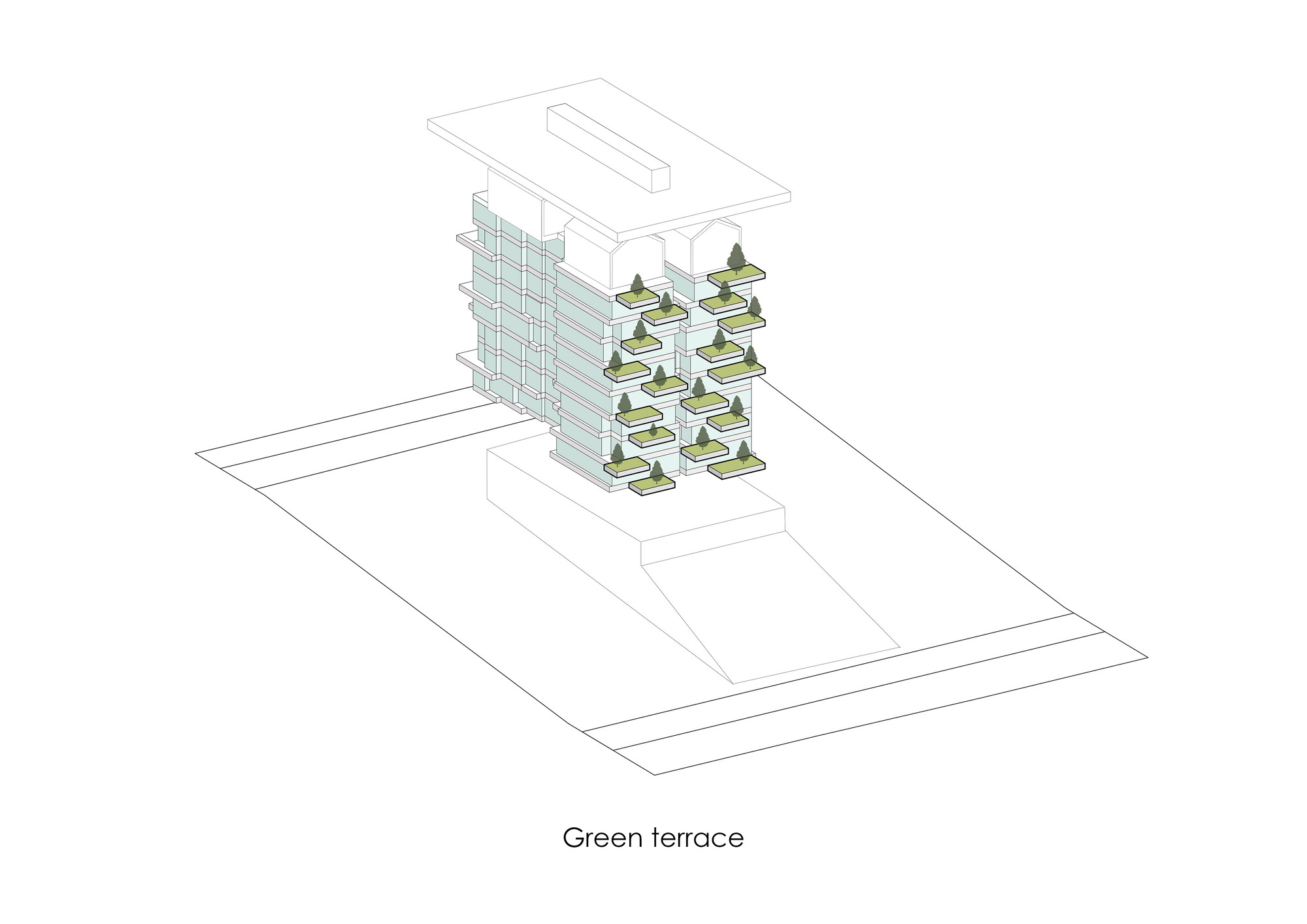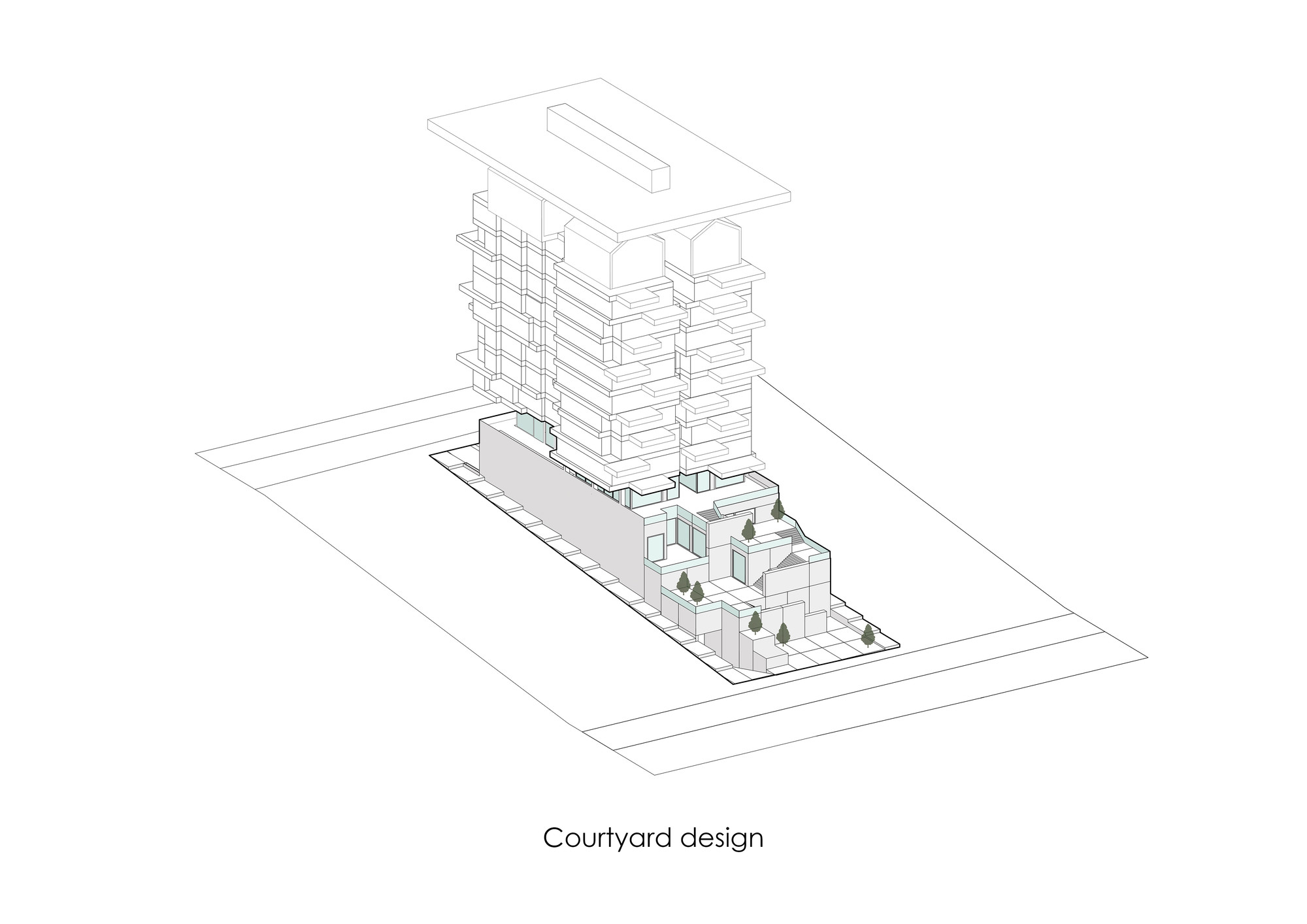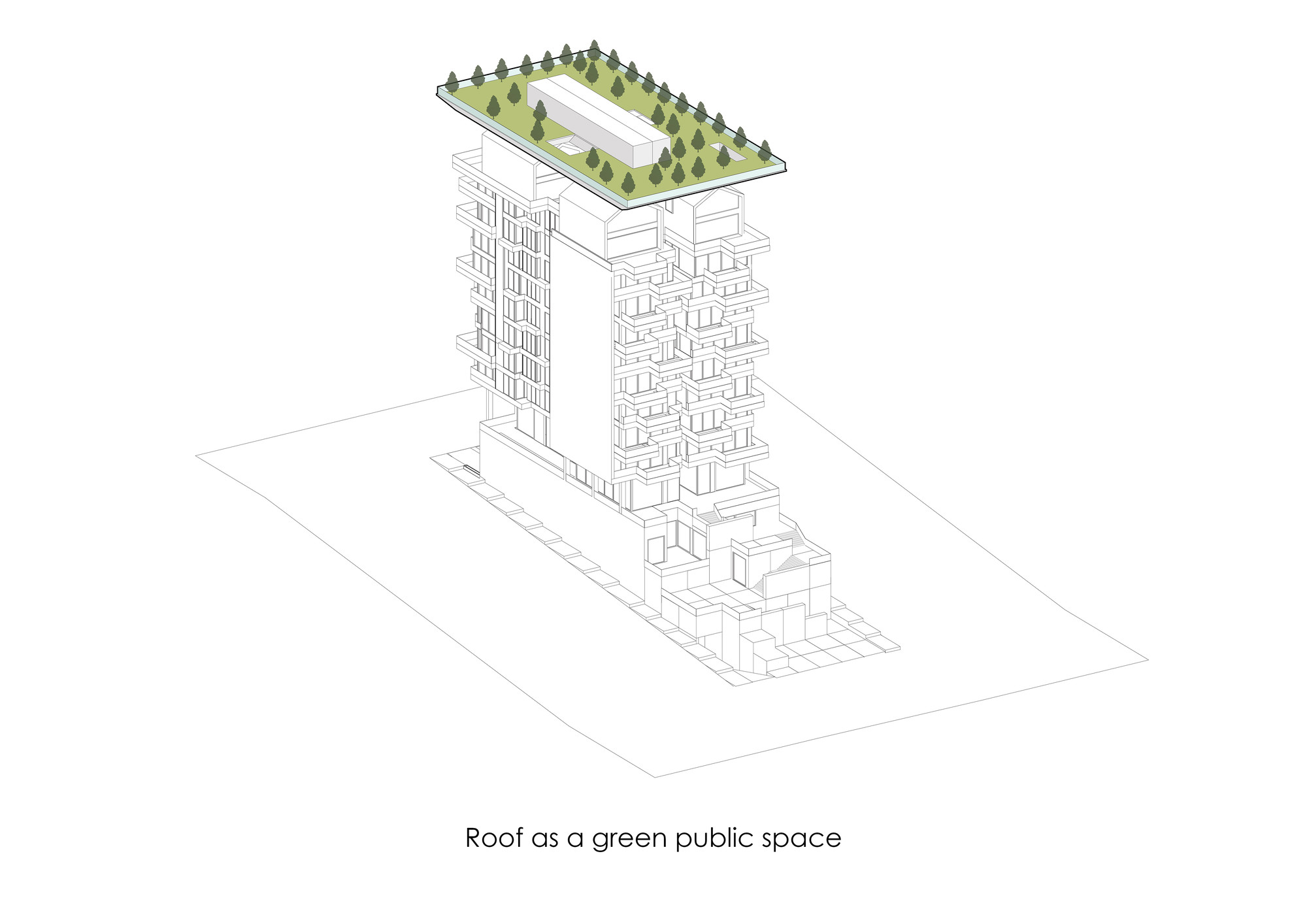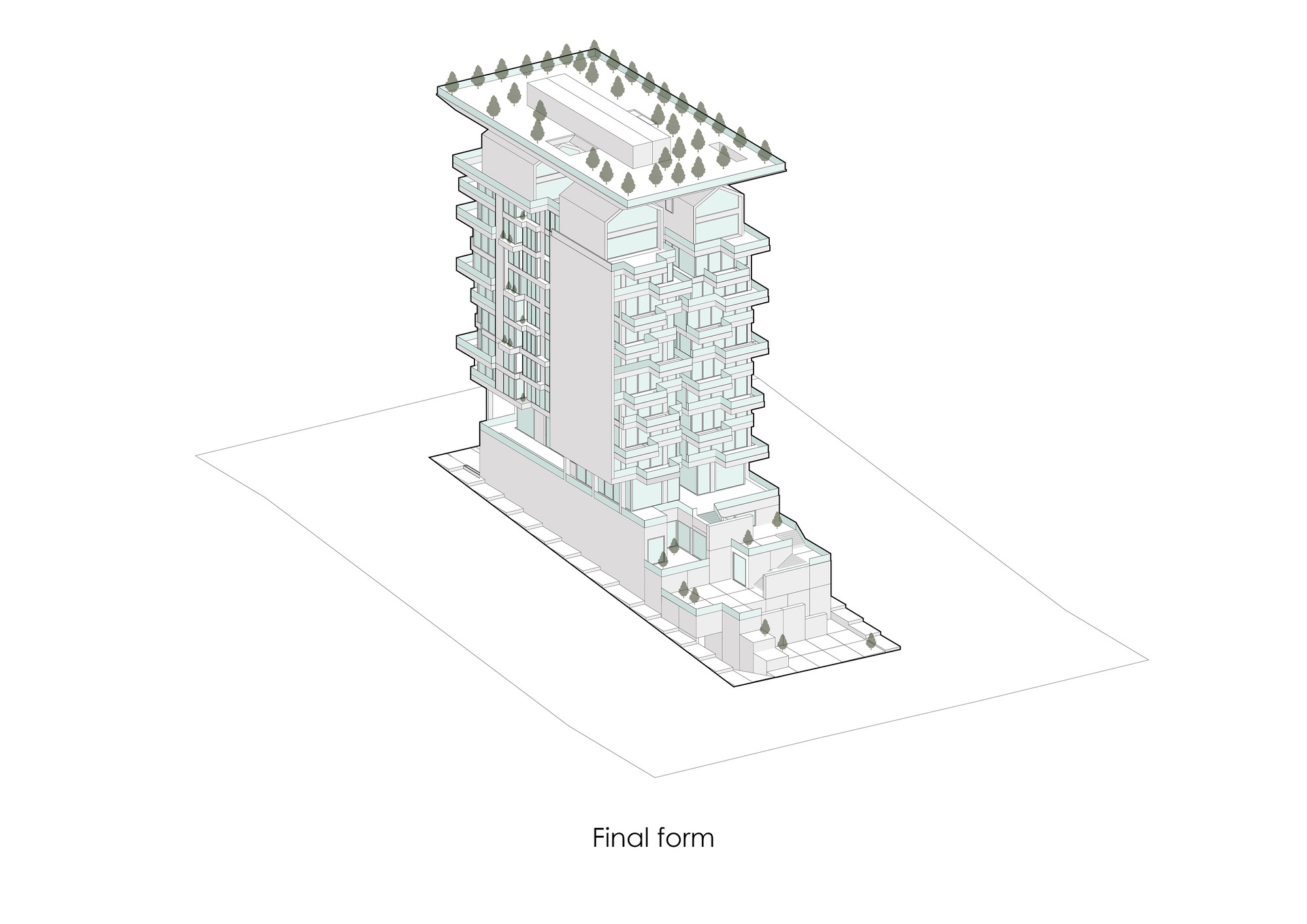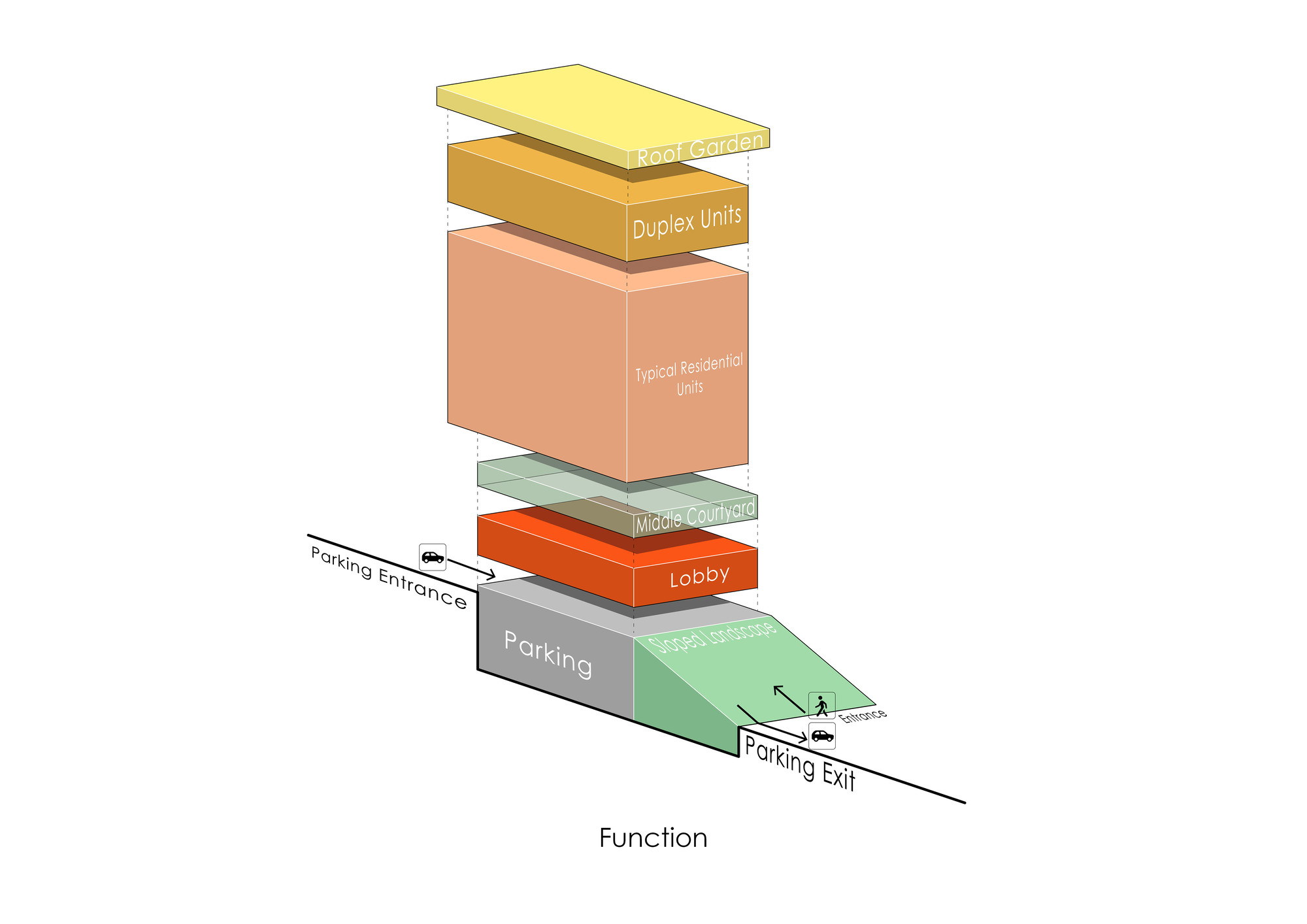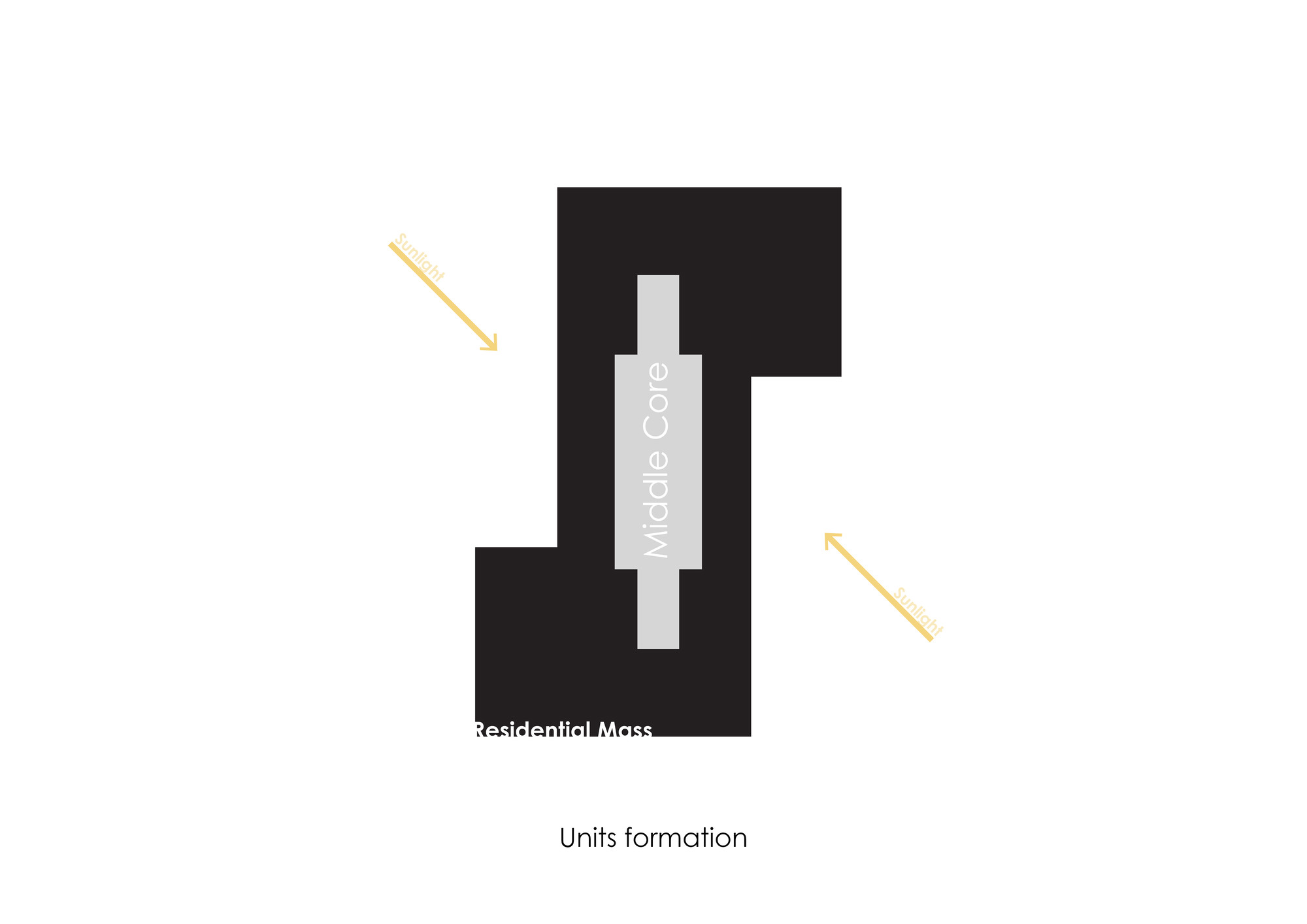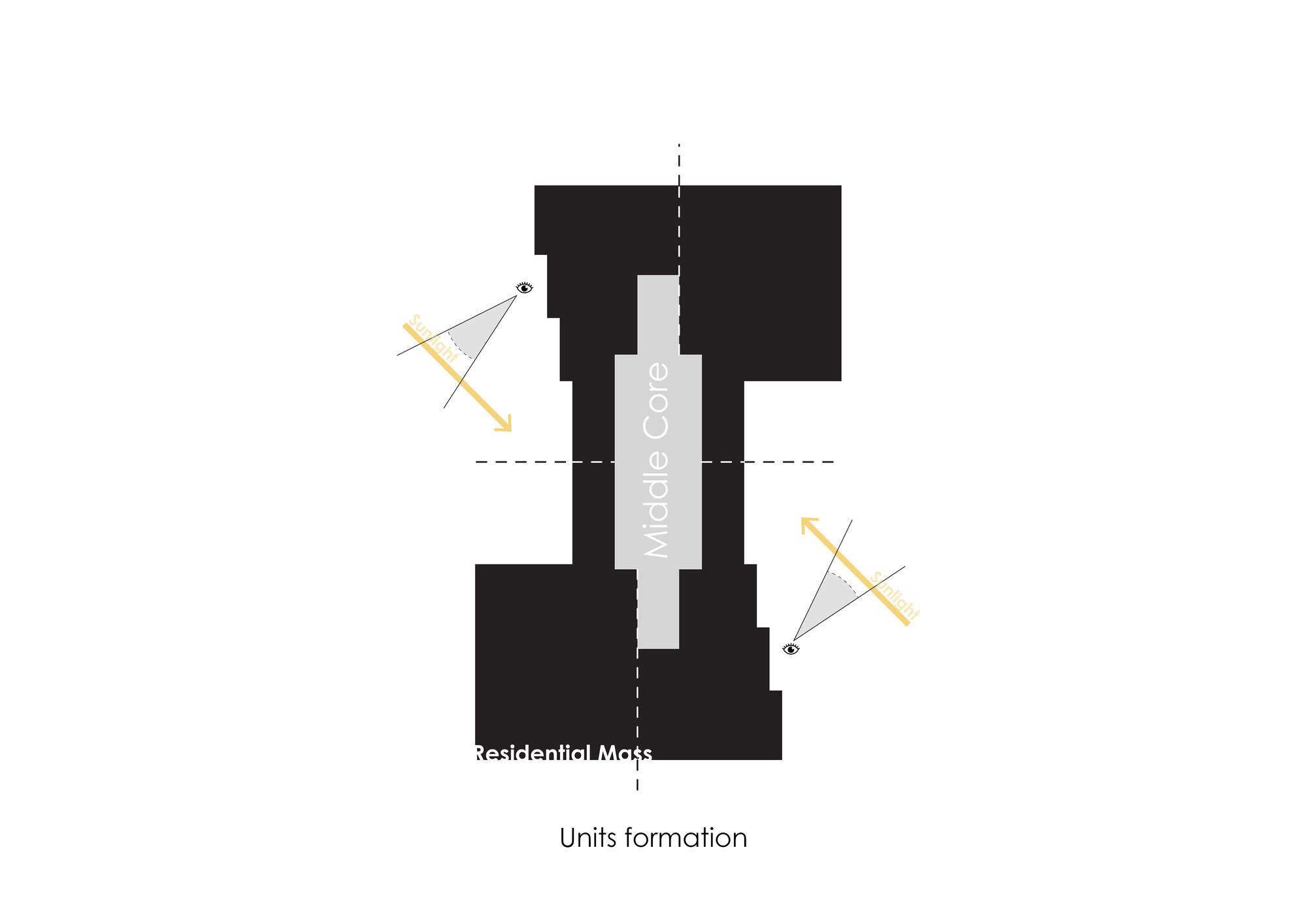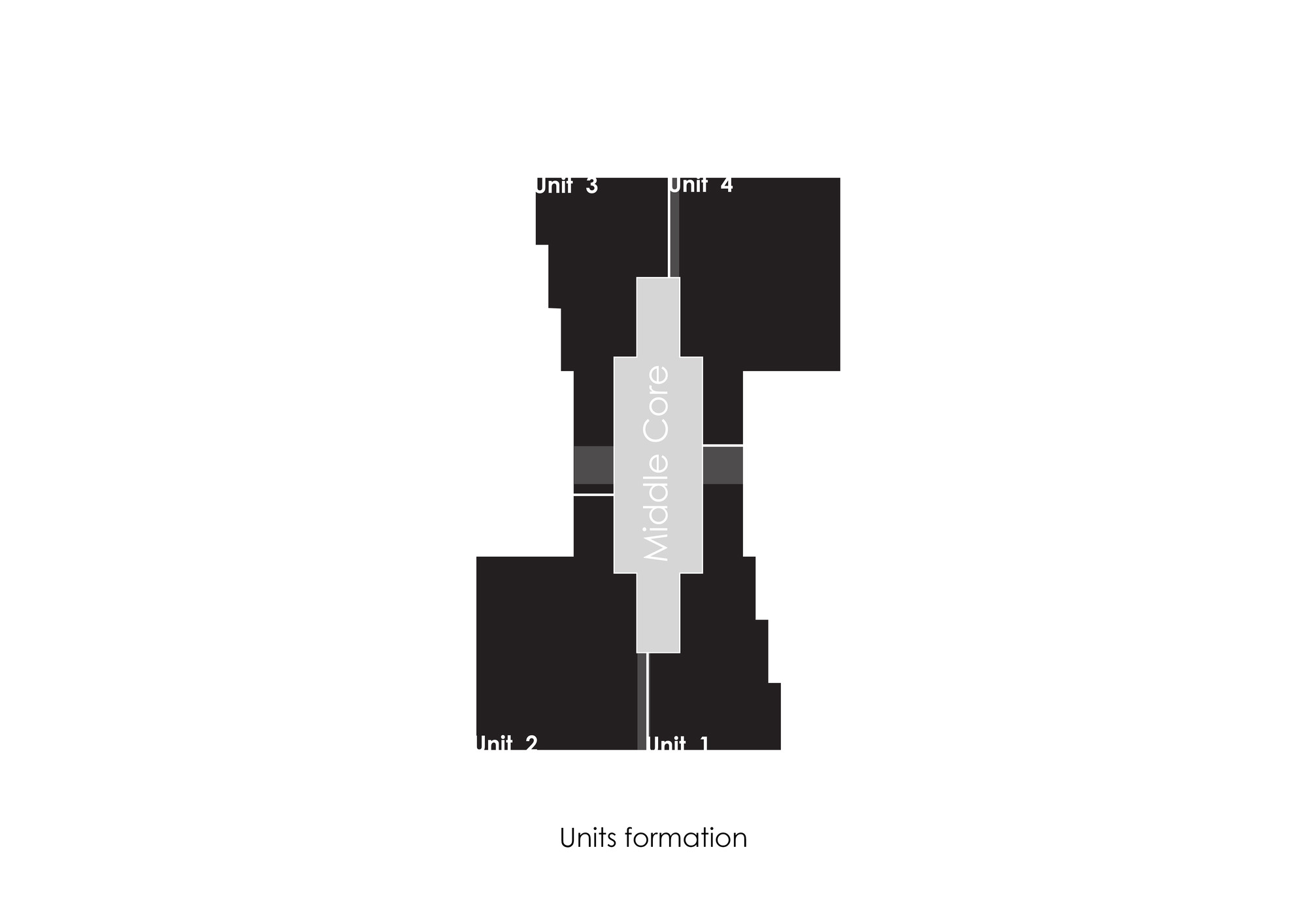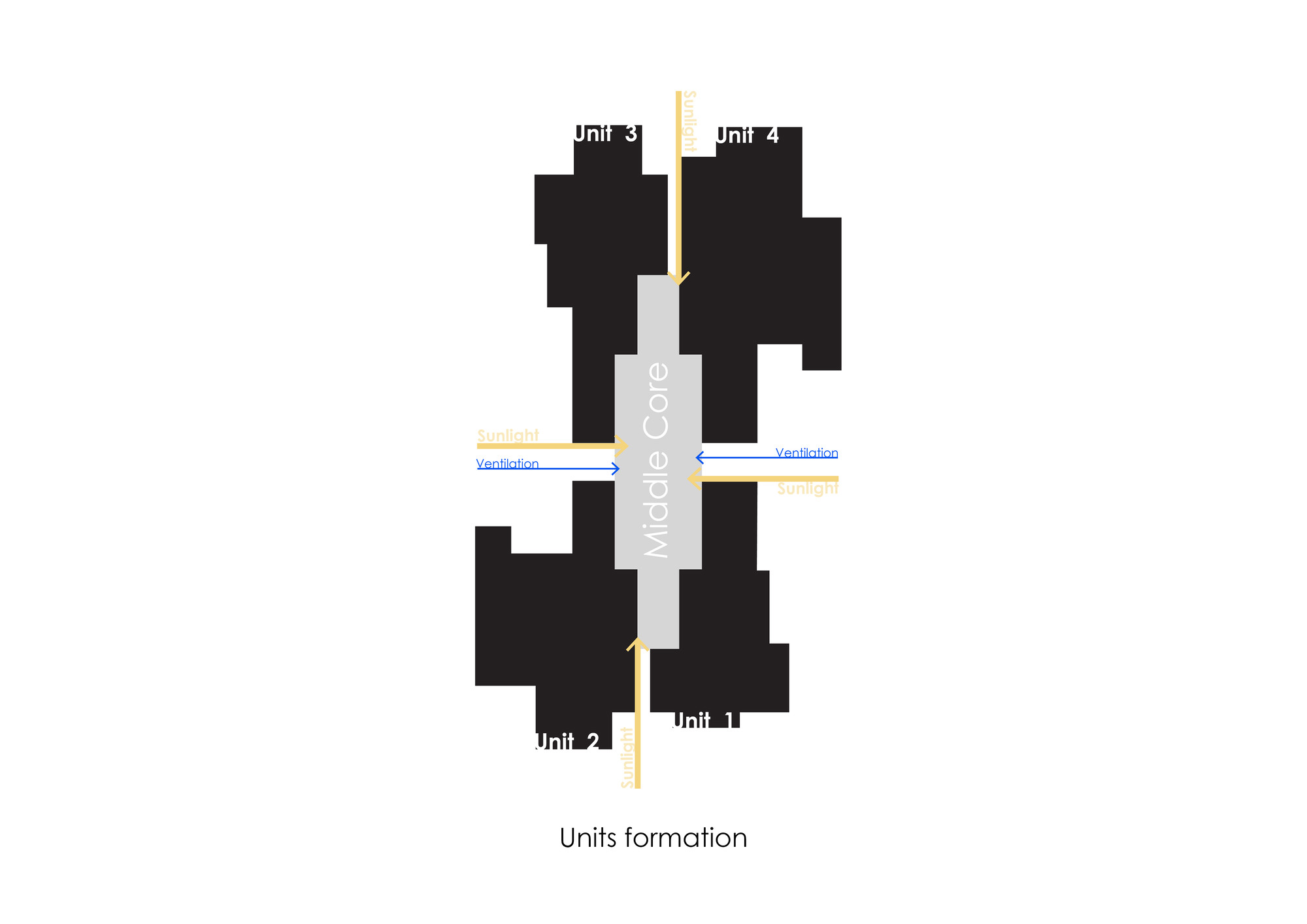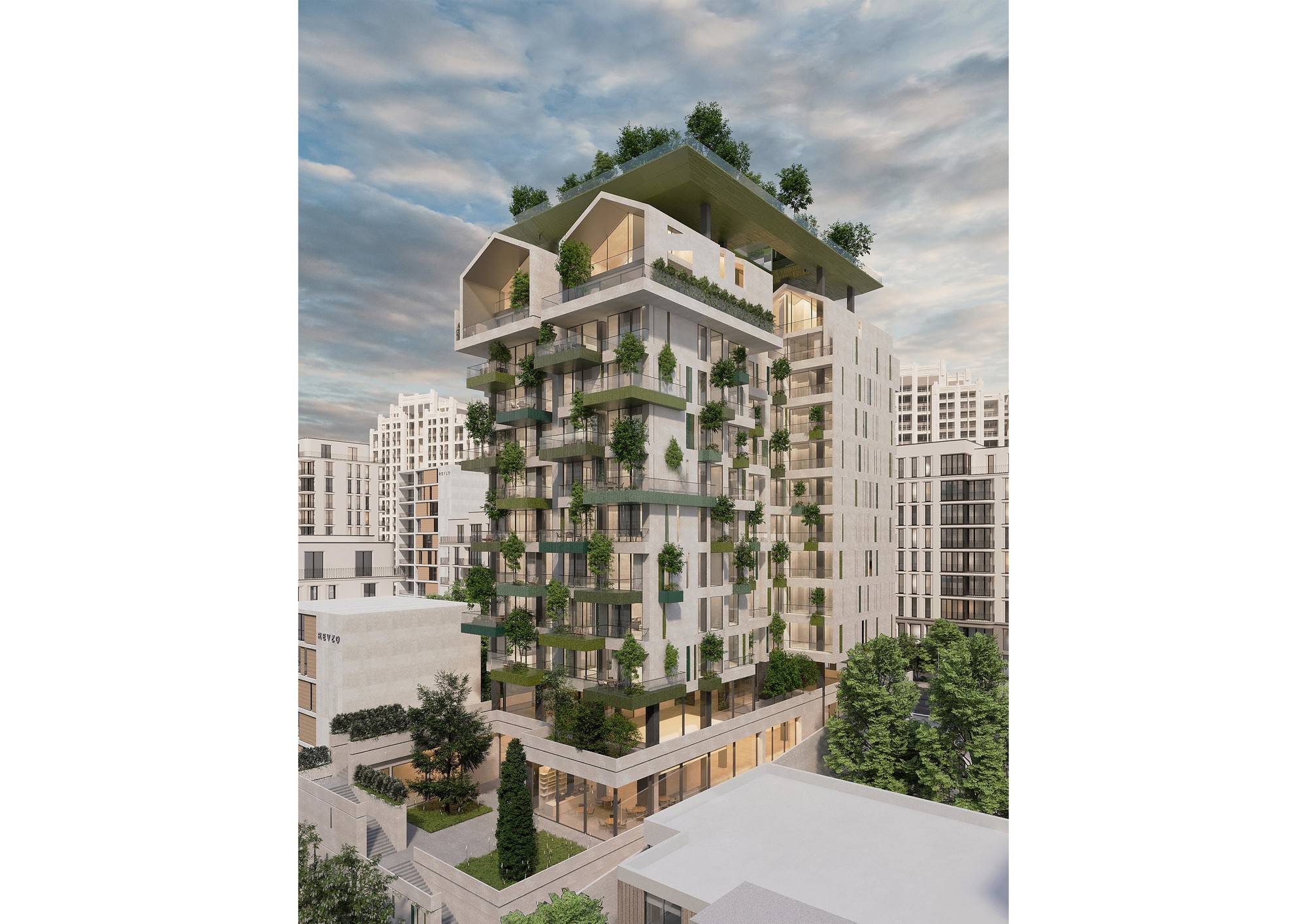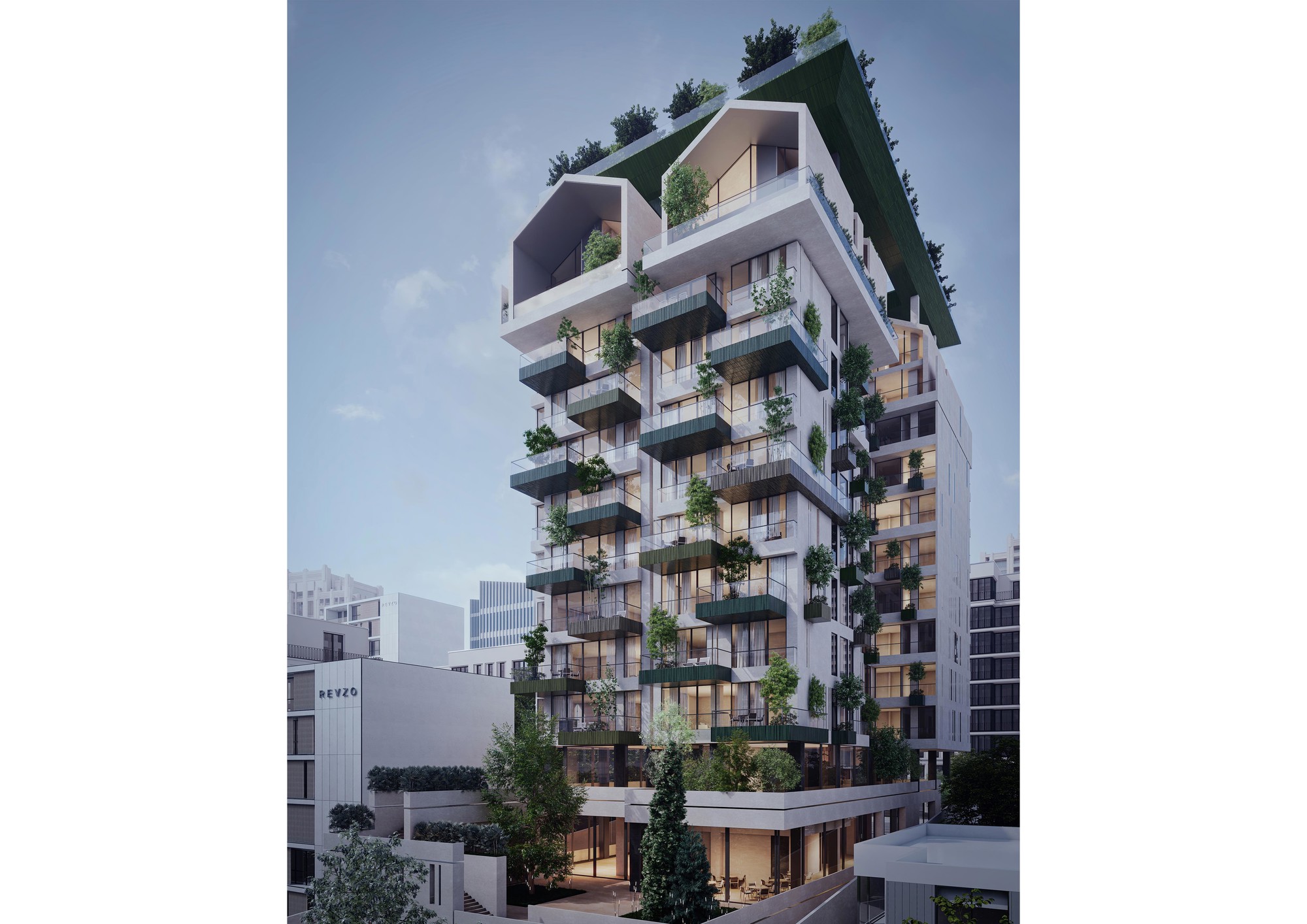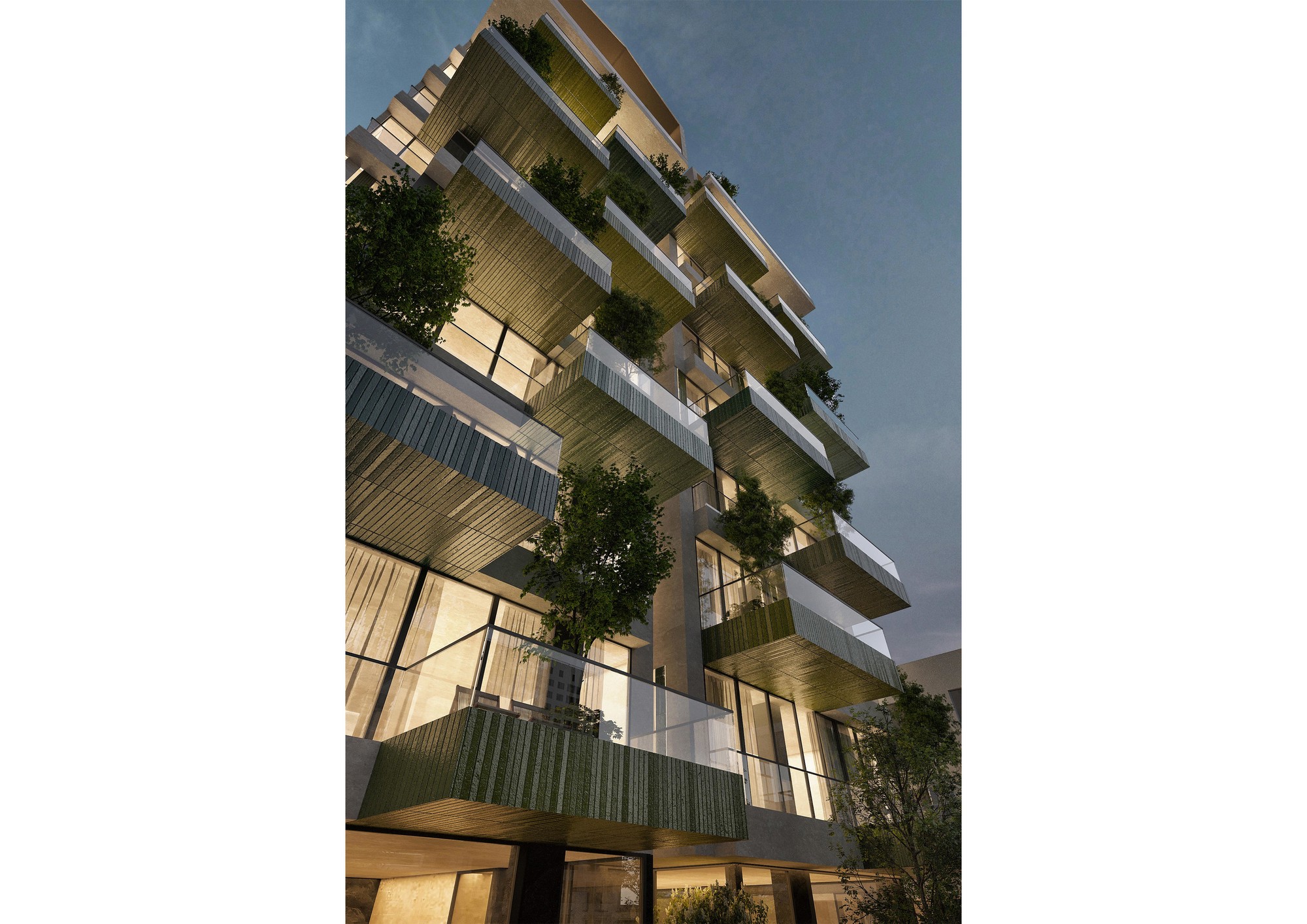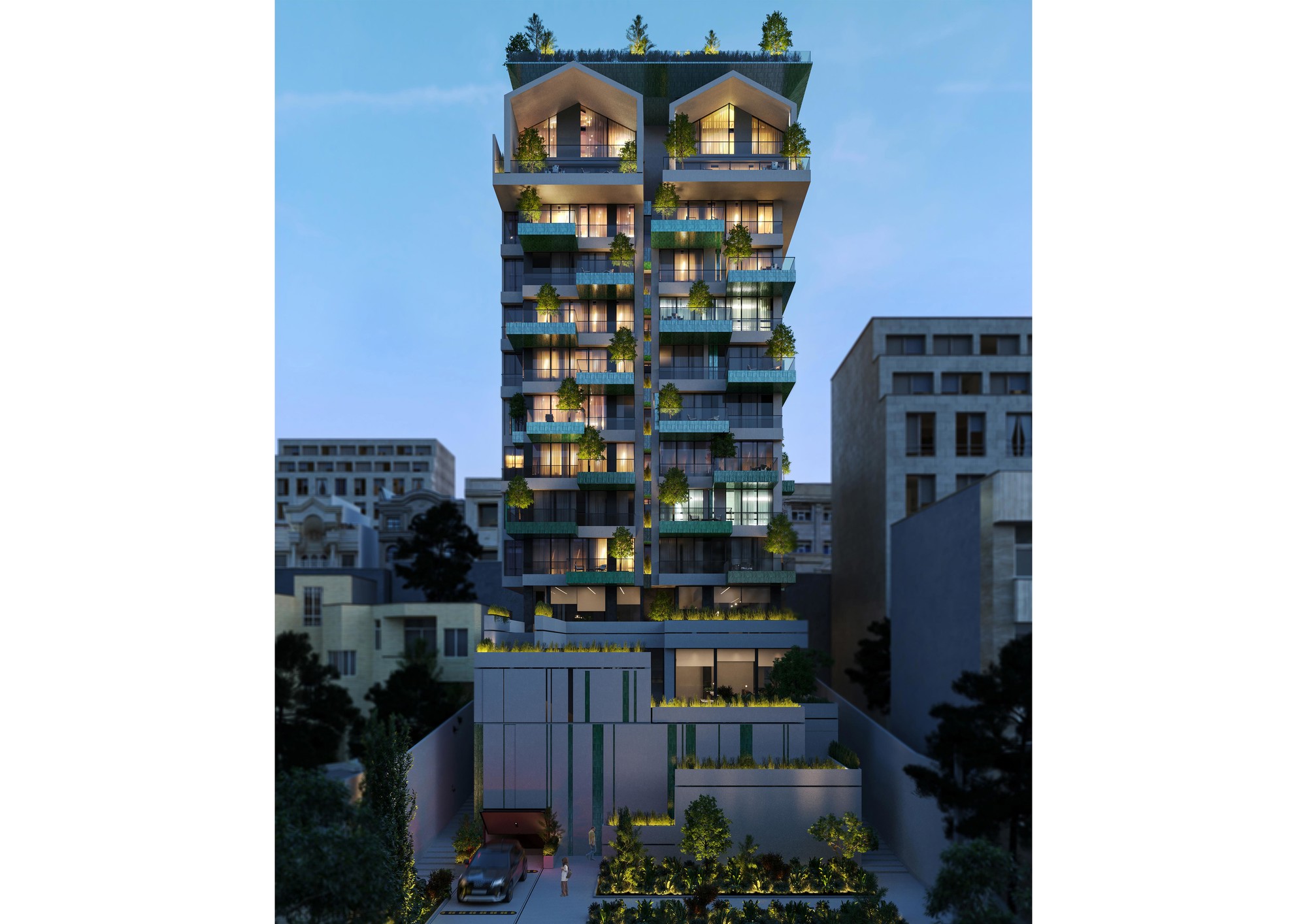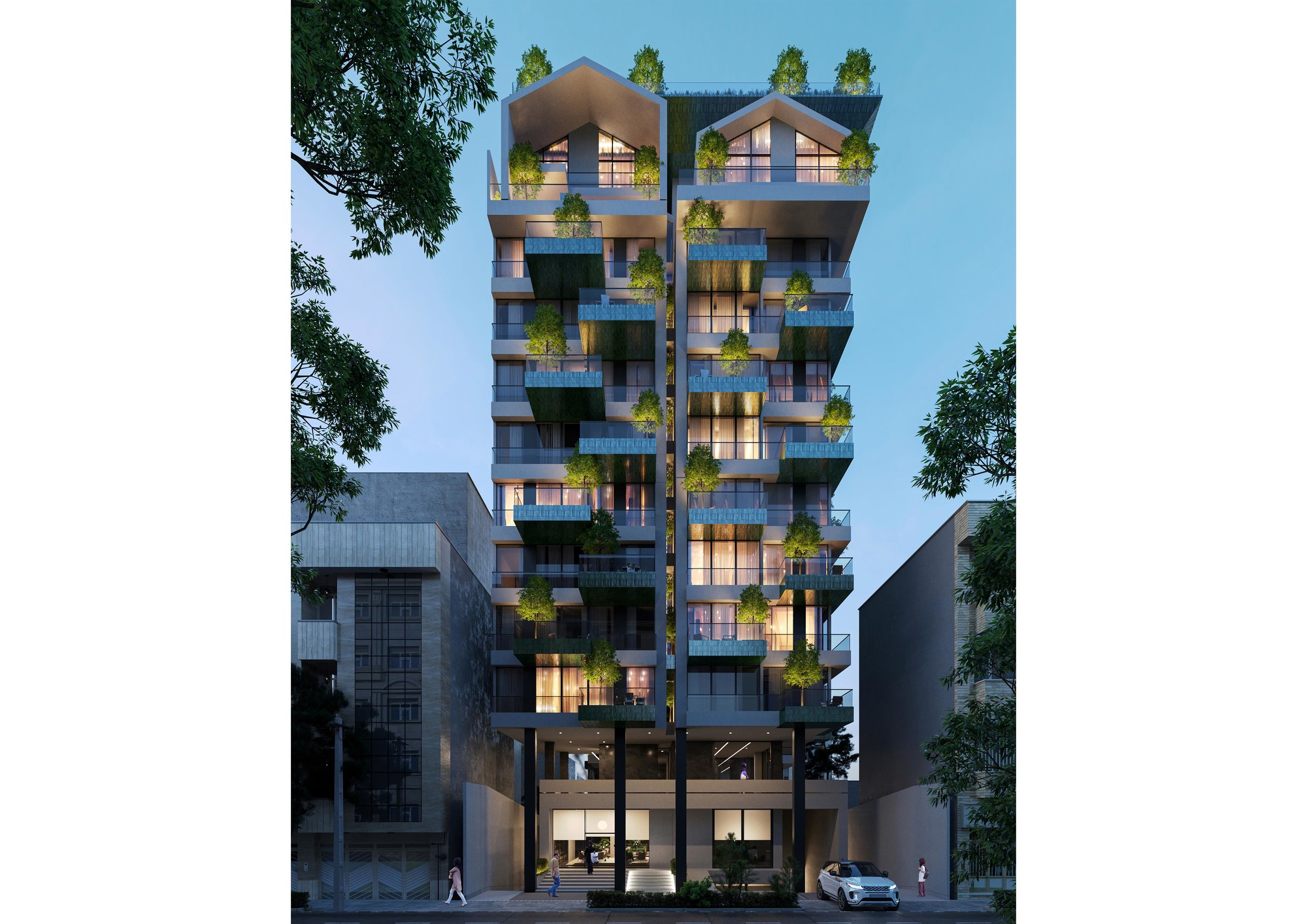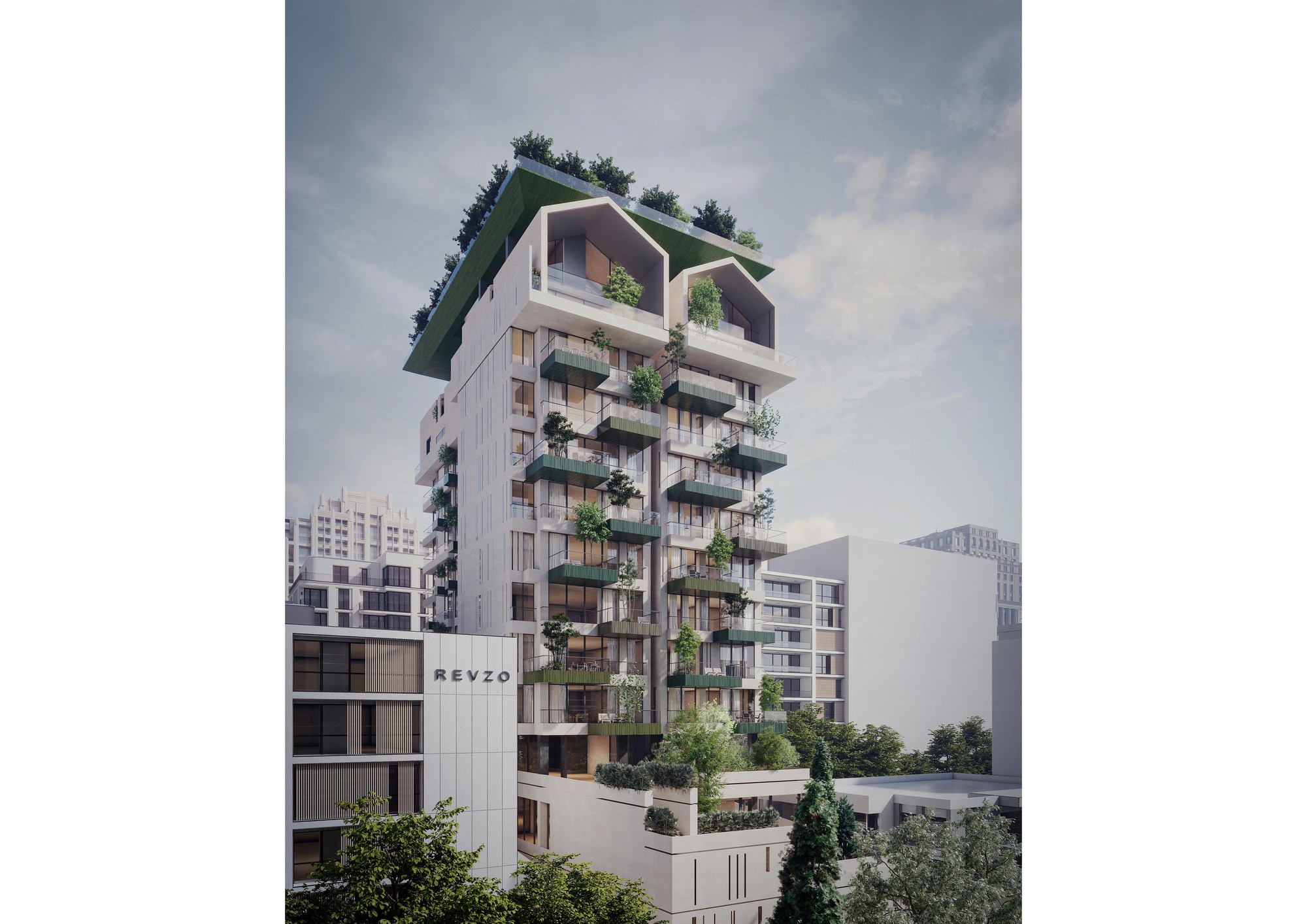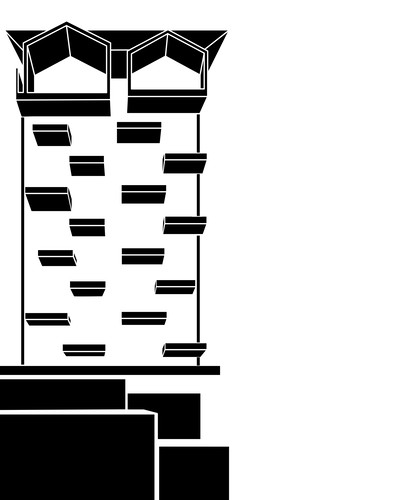

The Pasargad project is located in the Mehrshahr area of Karaj, situated on Pakdel Boulevard—one of the main boulevards of Mehrshahr due to the presence of a wide green space adjacent to it. Our conceptual approach to this project was shaped by the fact that the old urban fabric of Mehrshahr consisted mainly of a series of villa-style buildings, typically two or at most three floors high. This fabric is now undergoing demolition and transformation. At the same time, a permit for a high-rise structure had been issued along this axis. Therefore, the main idea was to explore how we could create an intermediary relationship between the disappearing villa-like structure and the new high-rise project. The function of the project is an office building. On the ground floor, we reinterpreted the villa patterns in terms of form, so that despite the administrative purpose of the building, this spatial gap could contribute to urban readability and allow the project to interact harmoniously with its surroundings at higher elevations. Above this layer, the main office structure is formed, and at the top of the complex, a duplex office space has been created. These duplex layers symbolically reference the villa-oriented identity of Mehrshahr and help reinforce that villa-like perception within the urban scale. From a spatial and organizational perspective, the project attempts in its various floors to detach itself from the façades and create a body with a fluid form between solid and transparent states. Accordingly, two main materials have been used for the building envelope: a reflective silver-colored material and a stone material. The combination of these two materials shifts the boundary between solidity and reflectivity in the visual reading of the building, and this gradient changes from low to high density as the building rises in height. Another important aspect of the project is the use of sloped sectional surfaces to transmit natural light. This strategy has been applied in the duplex areas as well, enhancing the quality of interior lighting and spatial experience. In terms of the building’s physical form, since the circulation core is positioned at the center, the surrounding façades have the ability to shift and transform. This flexibility has contributed to the creation of a mass that does not remain static, but rather has the capacity to change and adapt within the urban fabric.