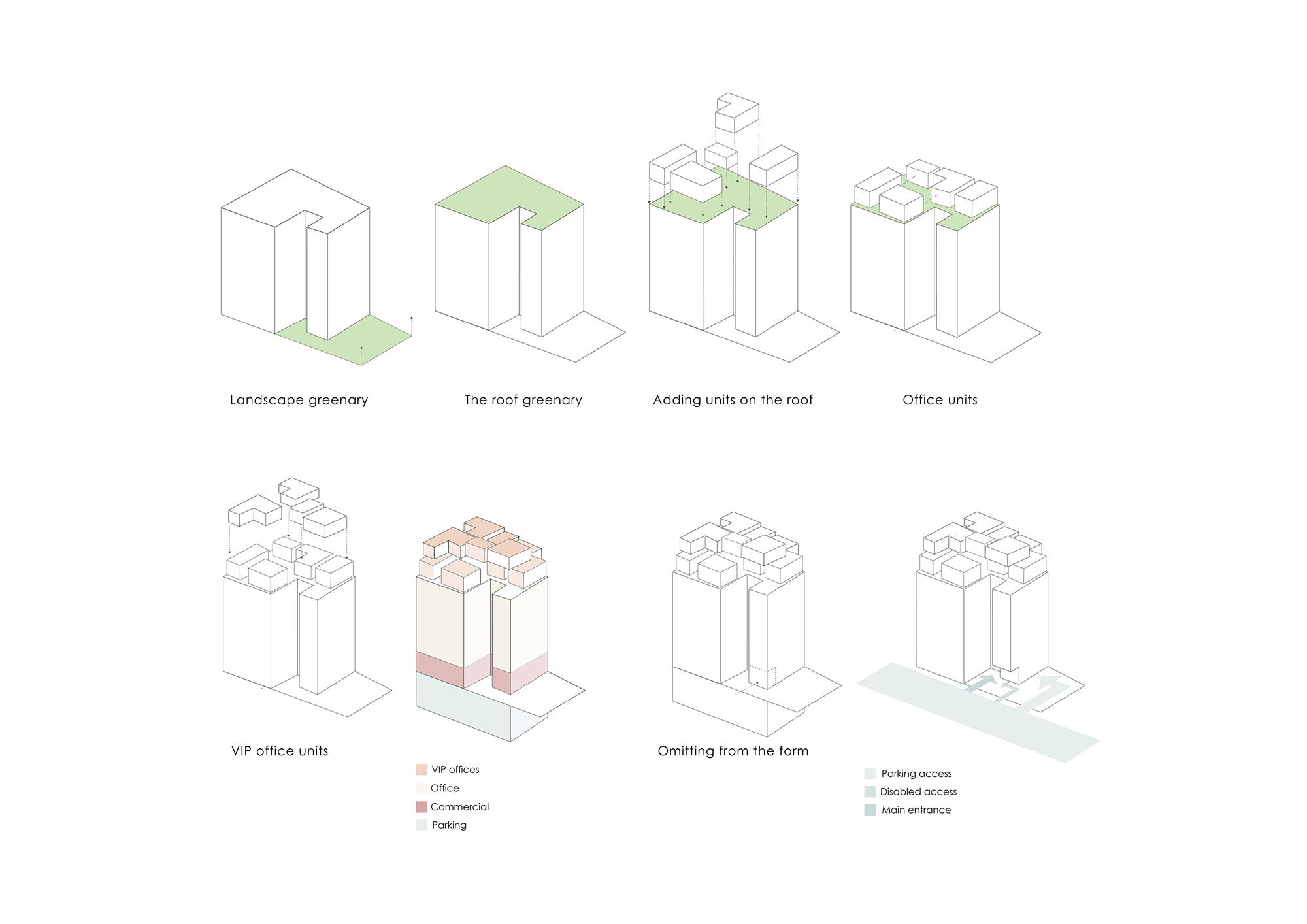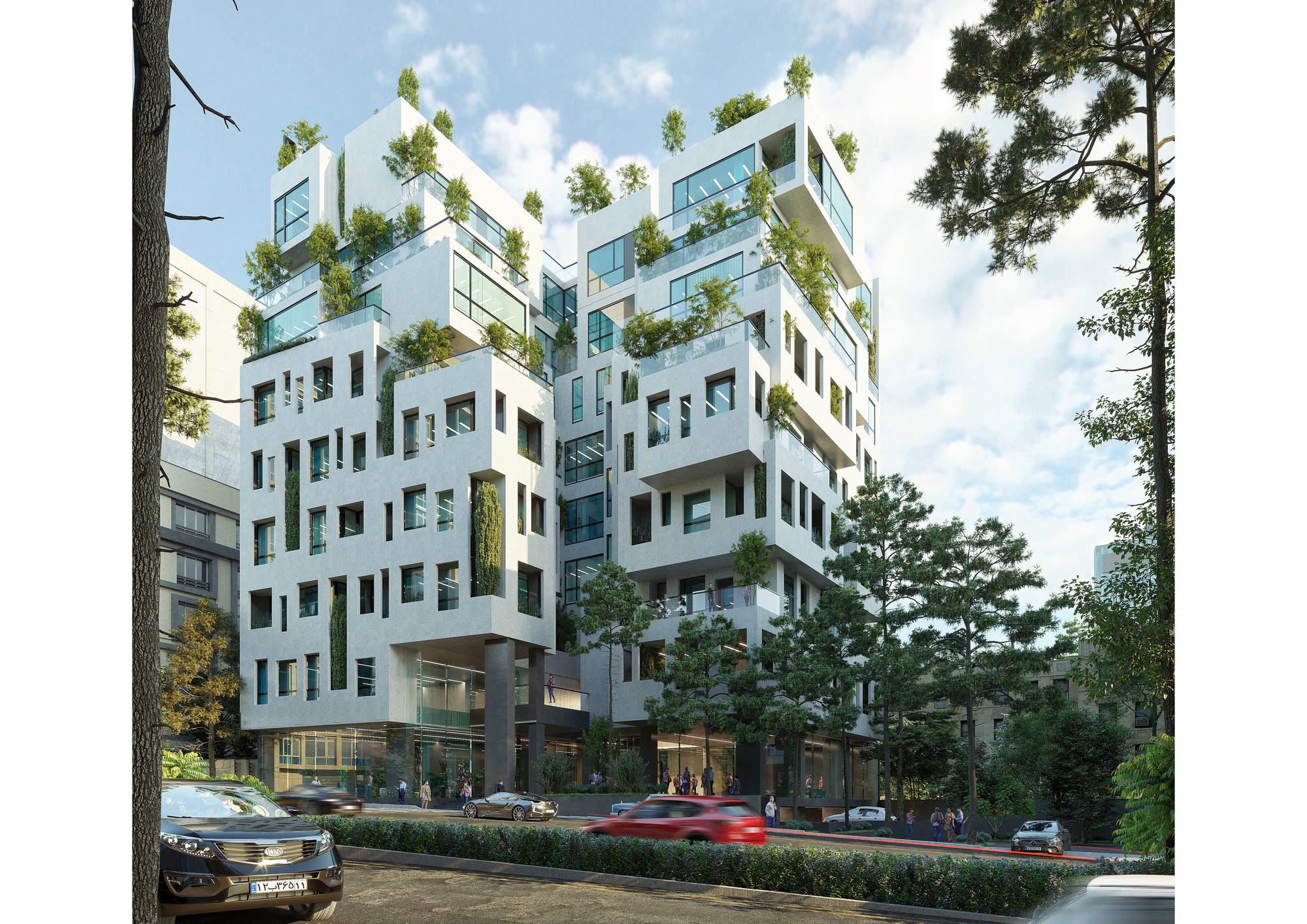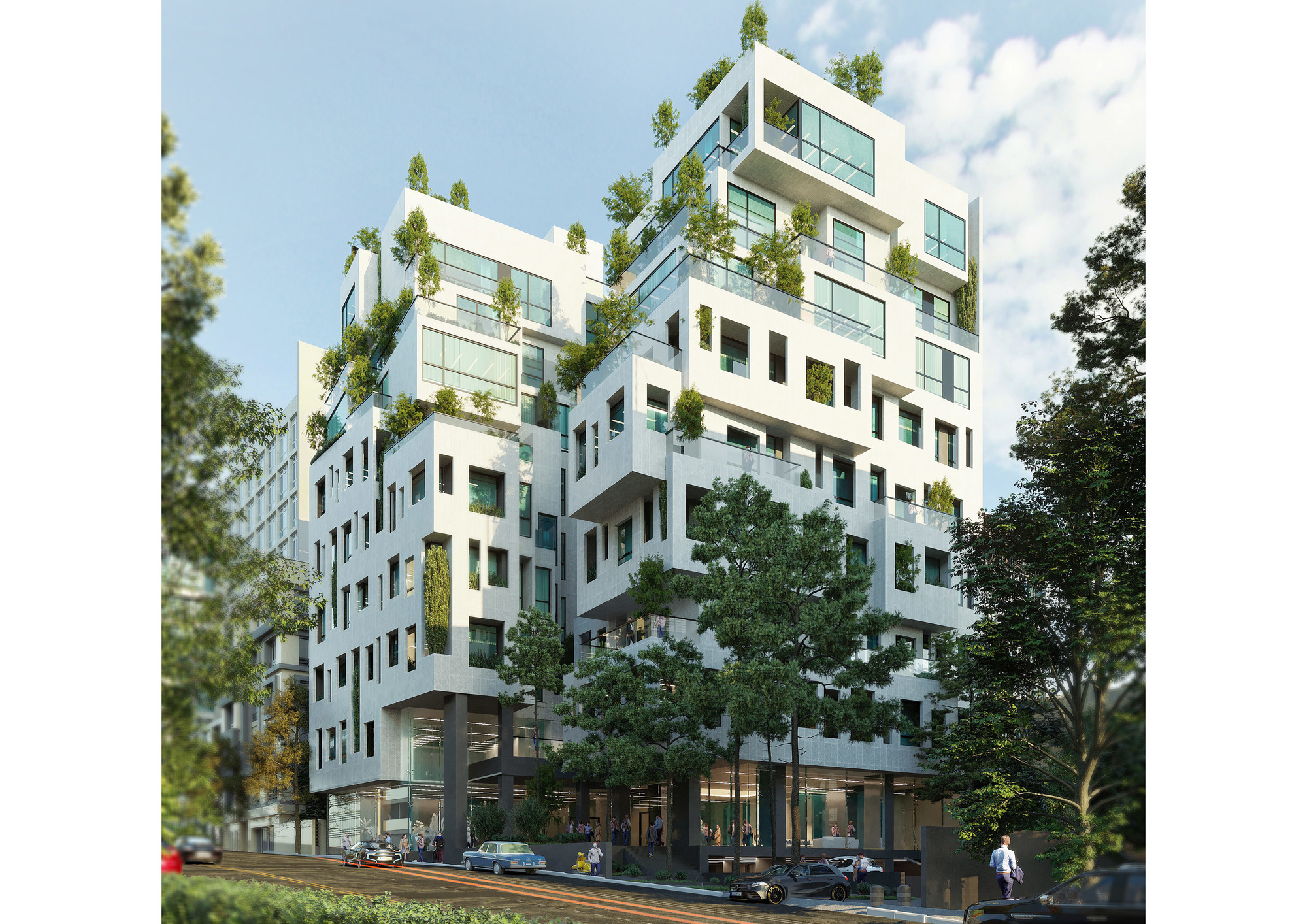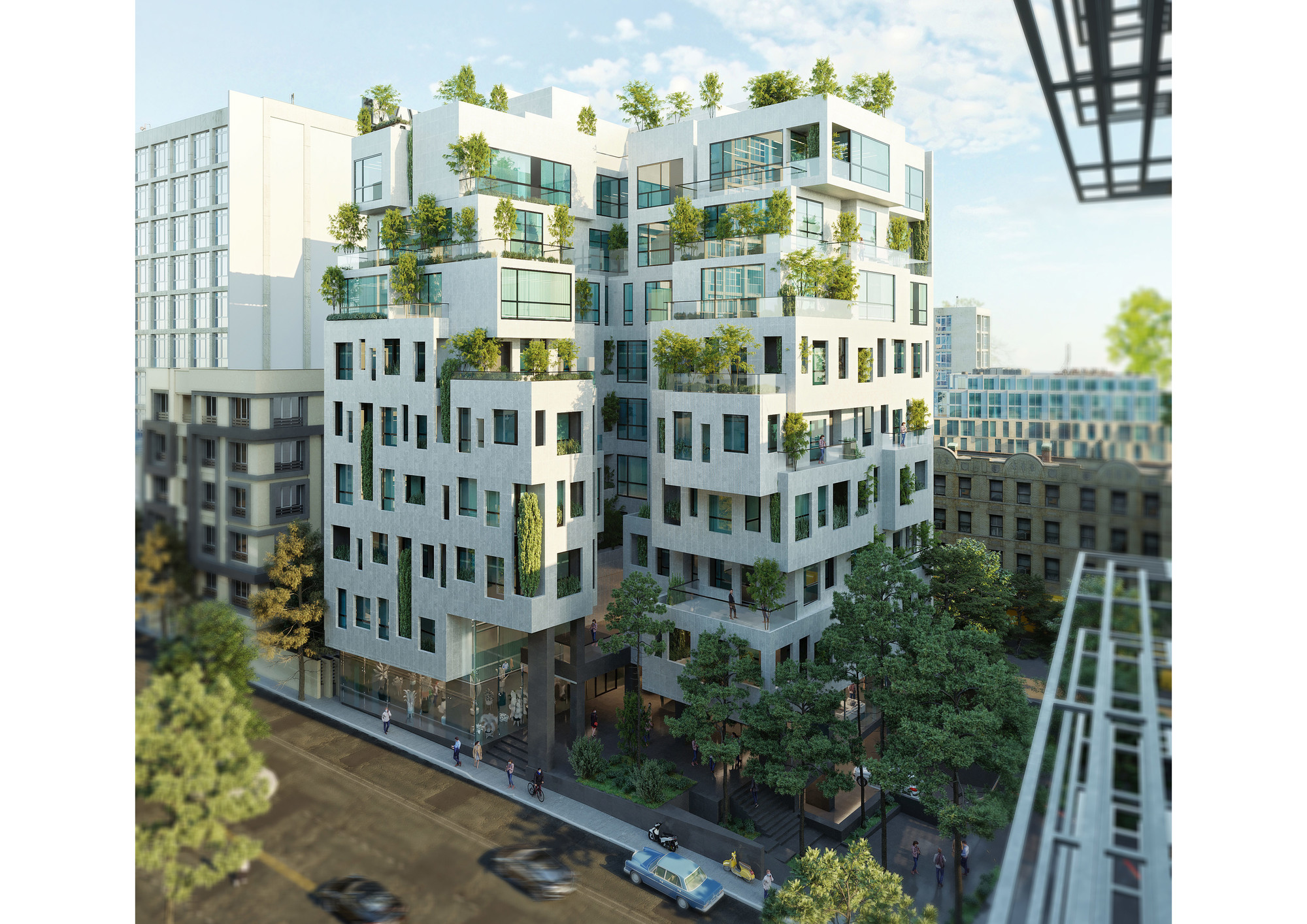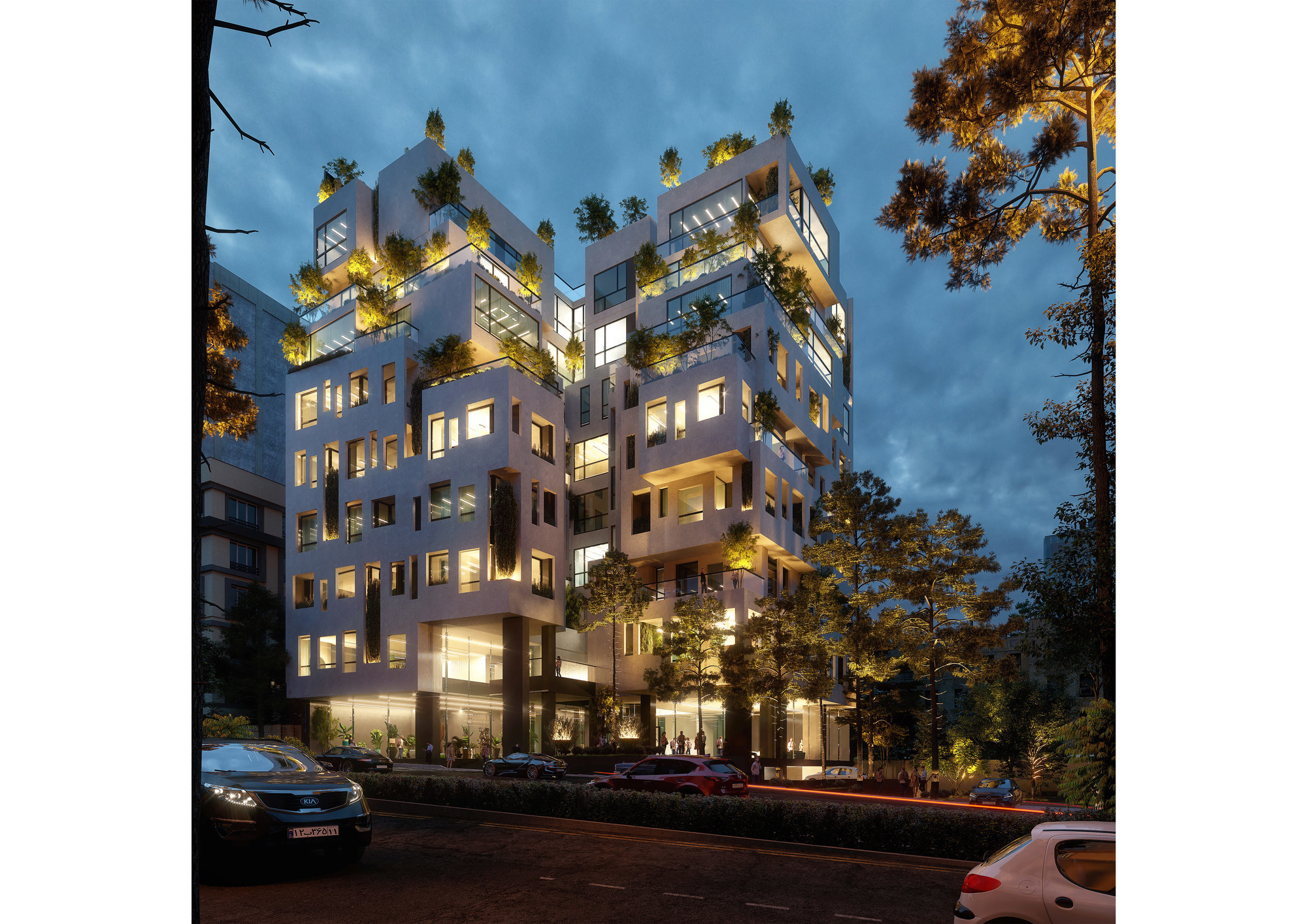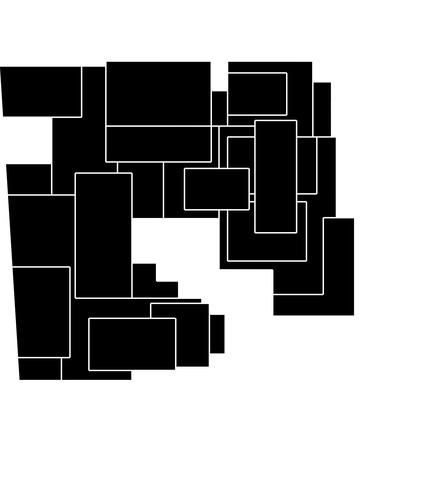

The main approach of the Kaveh Office and Commercial Building project was initiated by creating an interplay between the dualities of mass and void to blur the definitive boundary between interior and exterior while addressing the functional needs of the project. The void, often reduced to a passive element in buildings with functions limited to providing light and ventilation, is here utilized to add value to the qualitative spatial expressions. This void, expanding from the core to the façade, transforms the façade from a static two-dimensional boundary between the interior and exterior into an active layer interacting with the city. Its organization incorporates edges, pathways, and neighborhood relationships, contributing to its dynamic nature. This reduction is accompanied by the integration of built space and greenery, adapting to the unique characteristics and requirements of each floor. It aims to suspend perceptual expectations of the interior spaces’ diversity by leveraging visual constraints imposed by the building’s geometry, configuration, and non-physical parameters such as light, order, and perspective. Following this negative densification, independent structures are added on the top two floors, where workspaces and office areas are defined within their distinct spatial envelopes. At the same time, a networked structure is preserved, connecting each node through intermediary spaces that carry characteristics from both ends of the functional spectrum. Ultimately, this process shapes a cohesive building that simultaneously accommodates and redefines contrasting qualities.