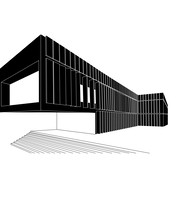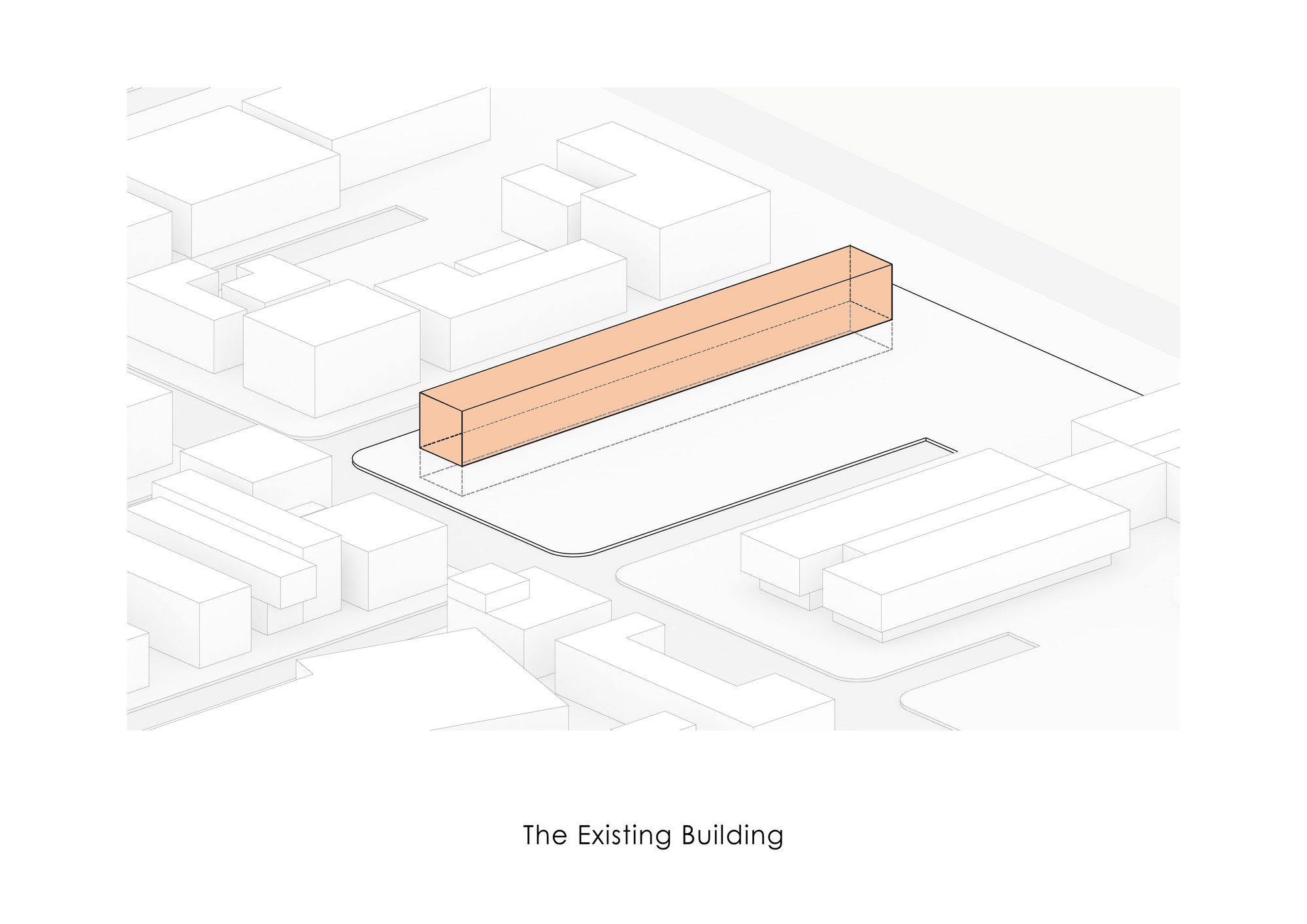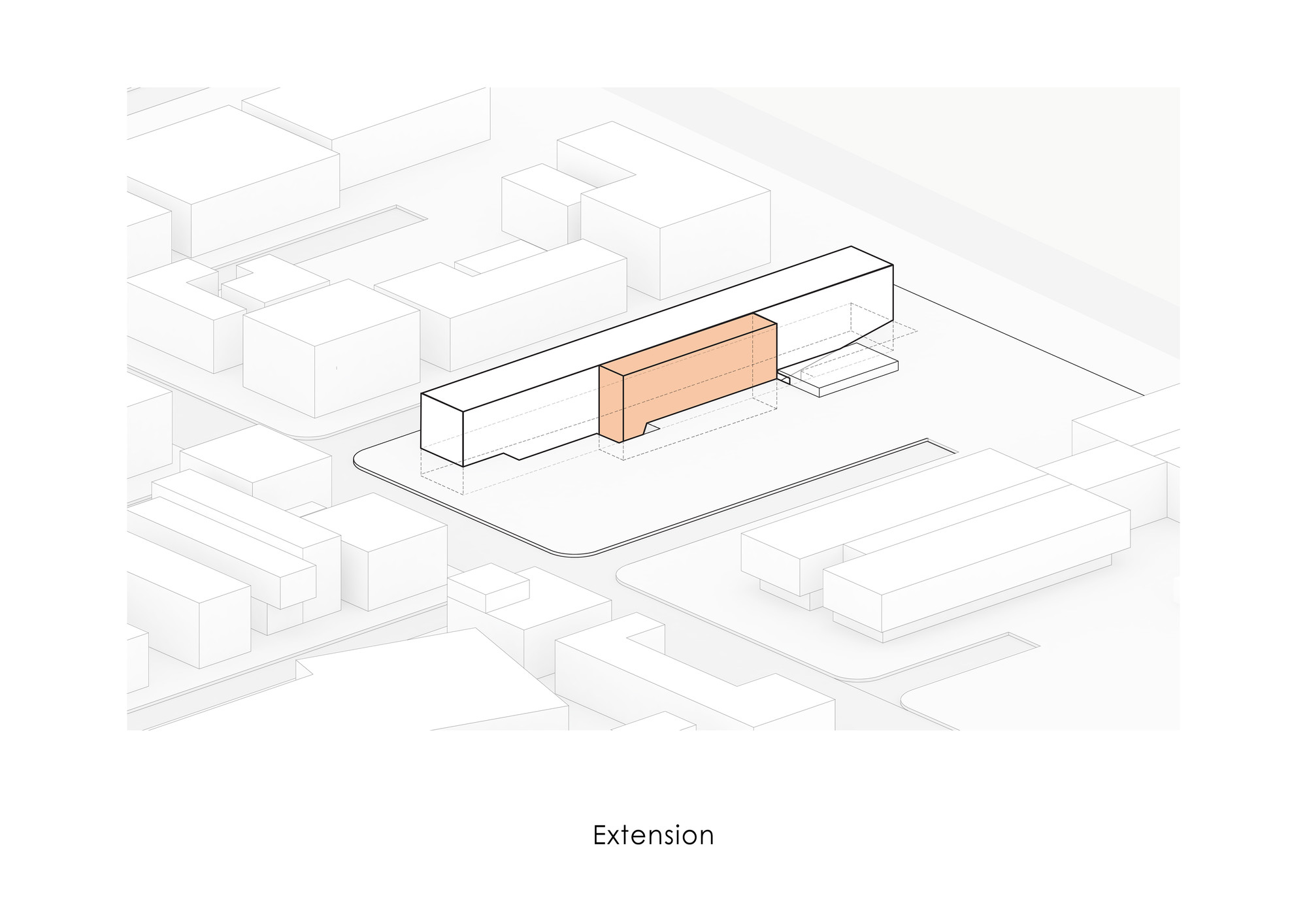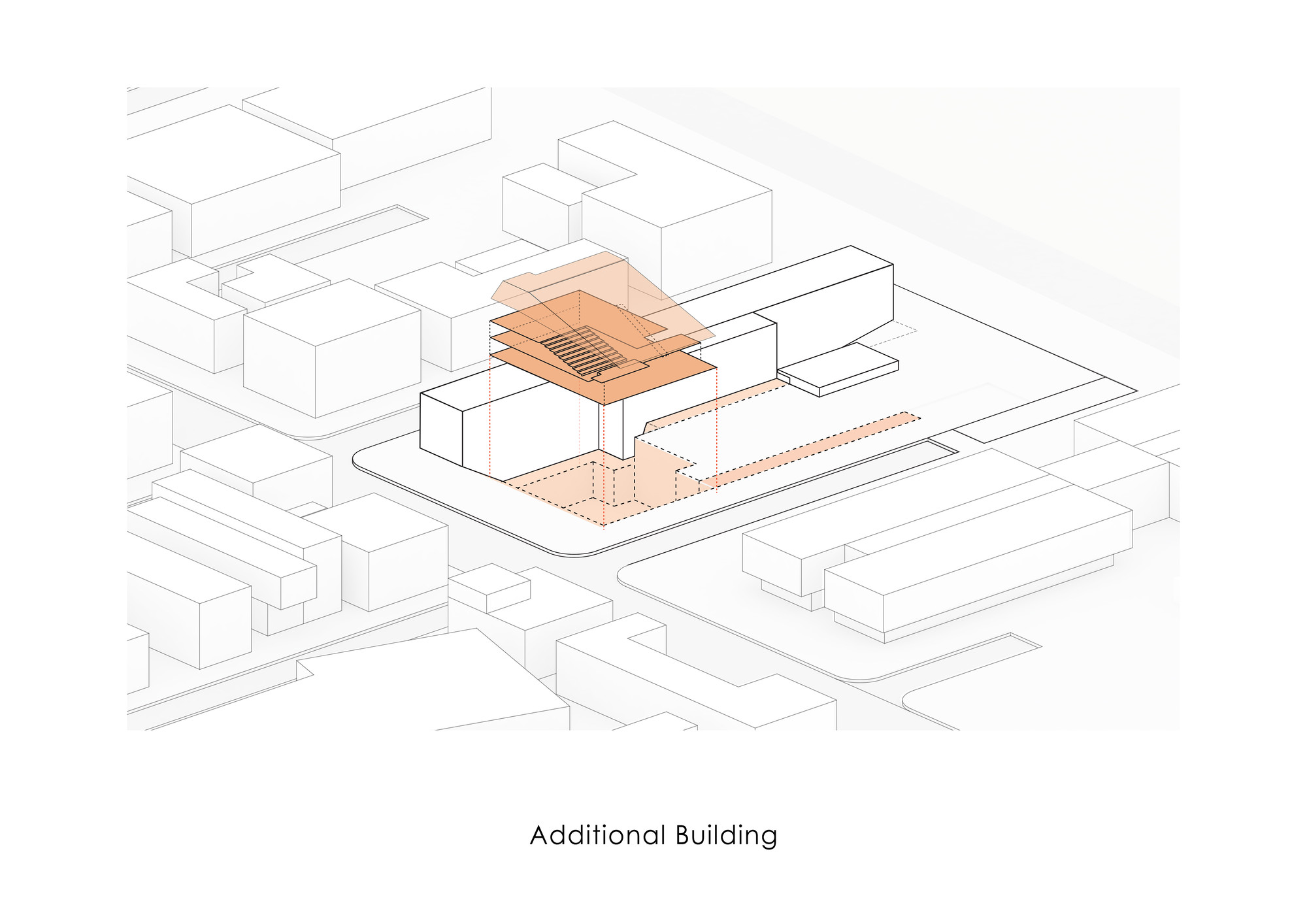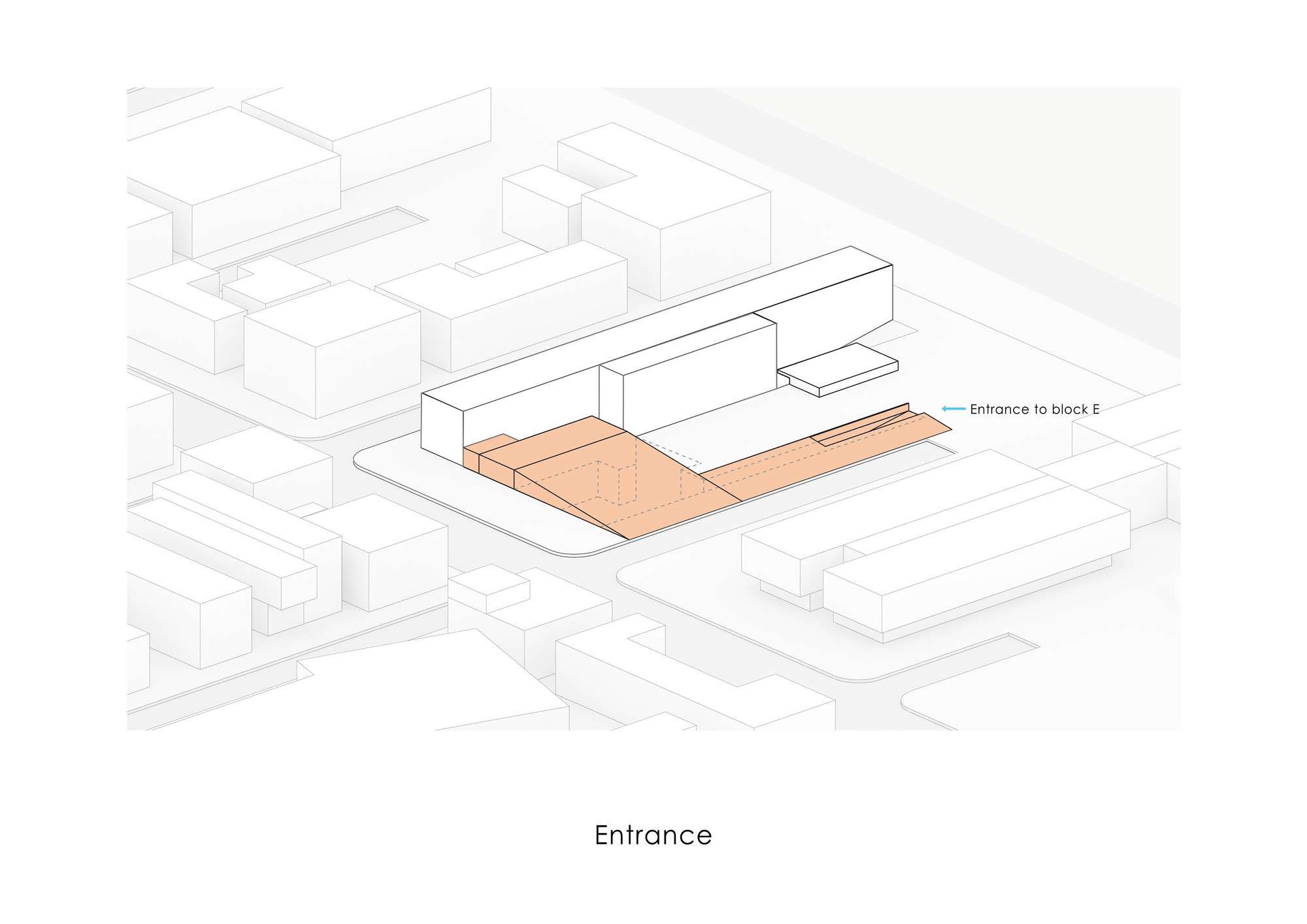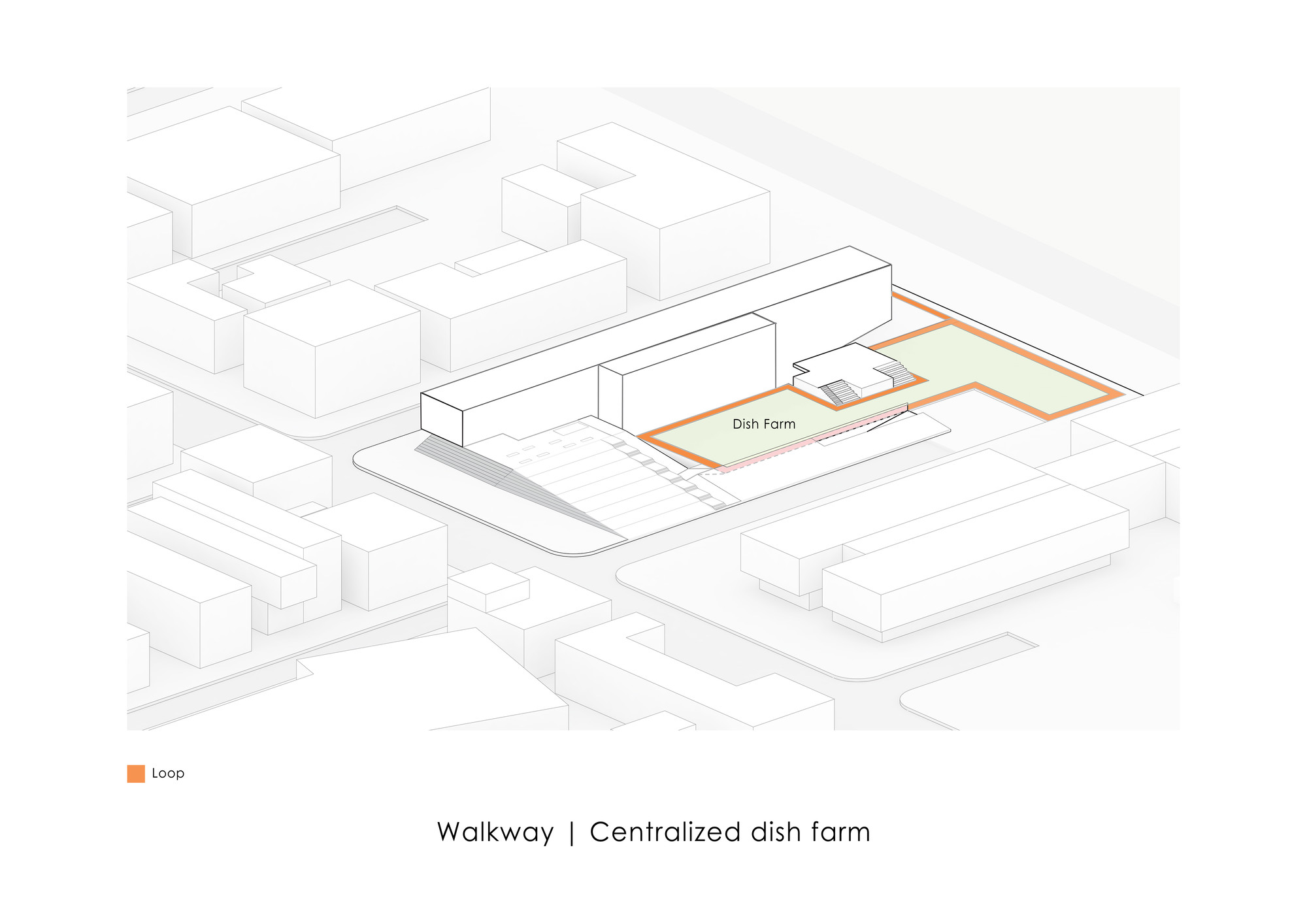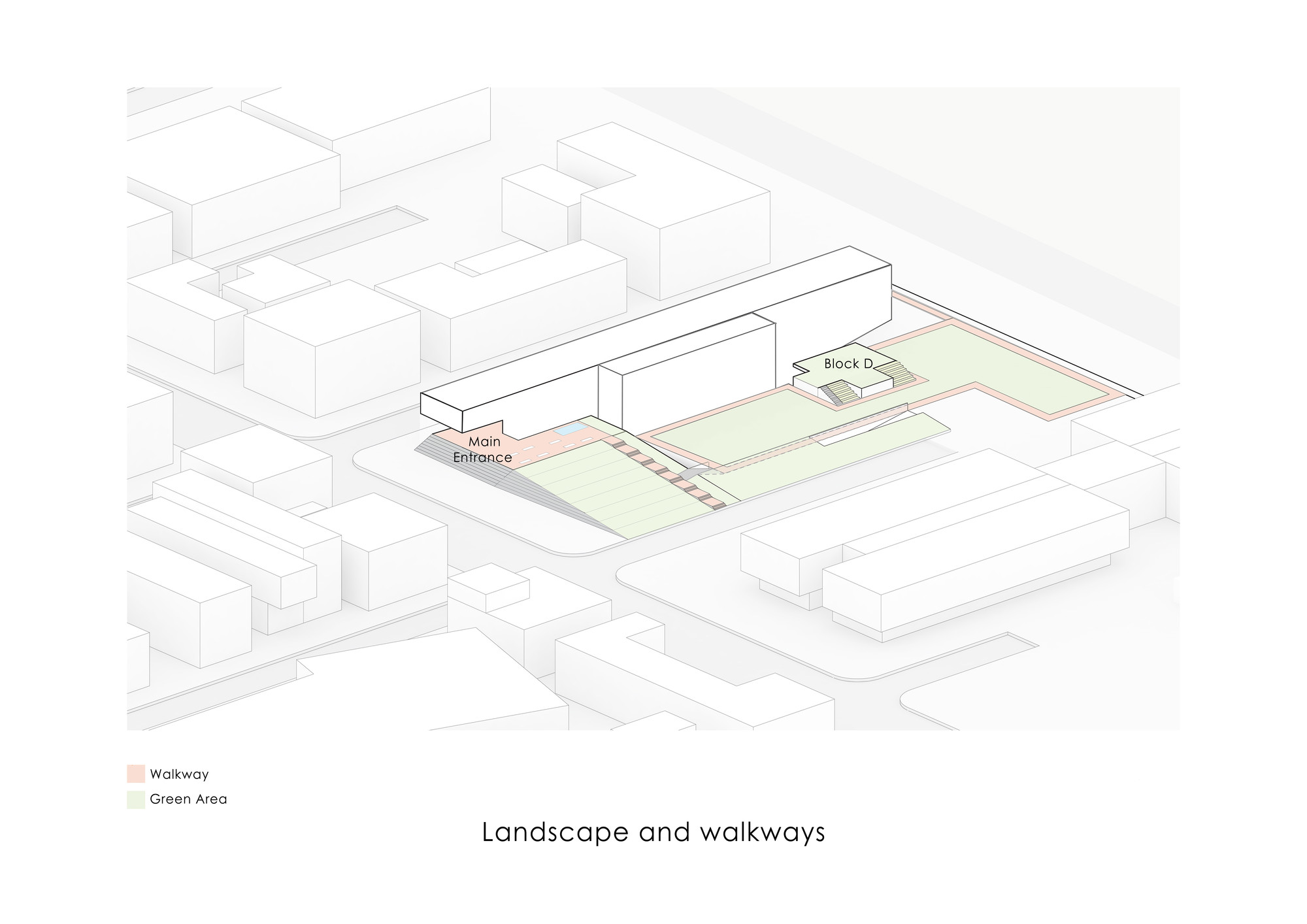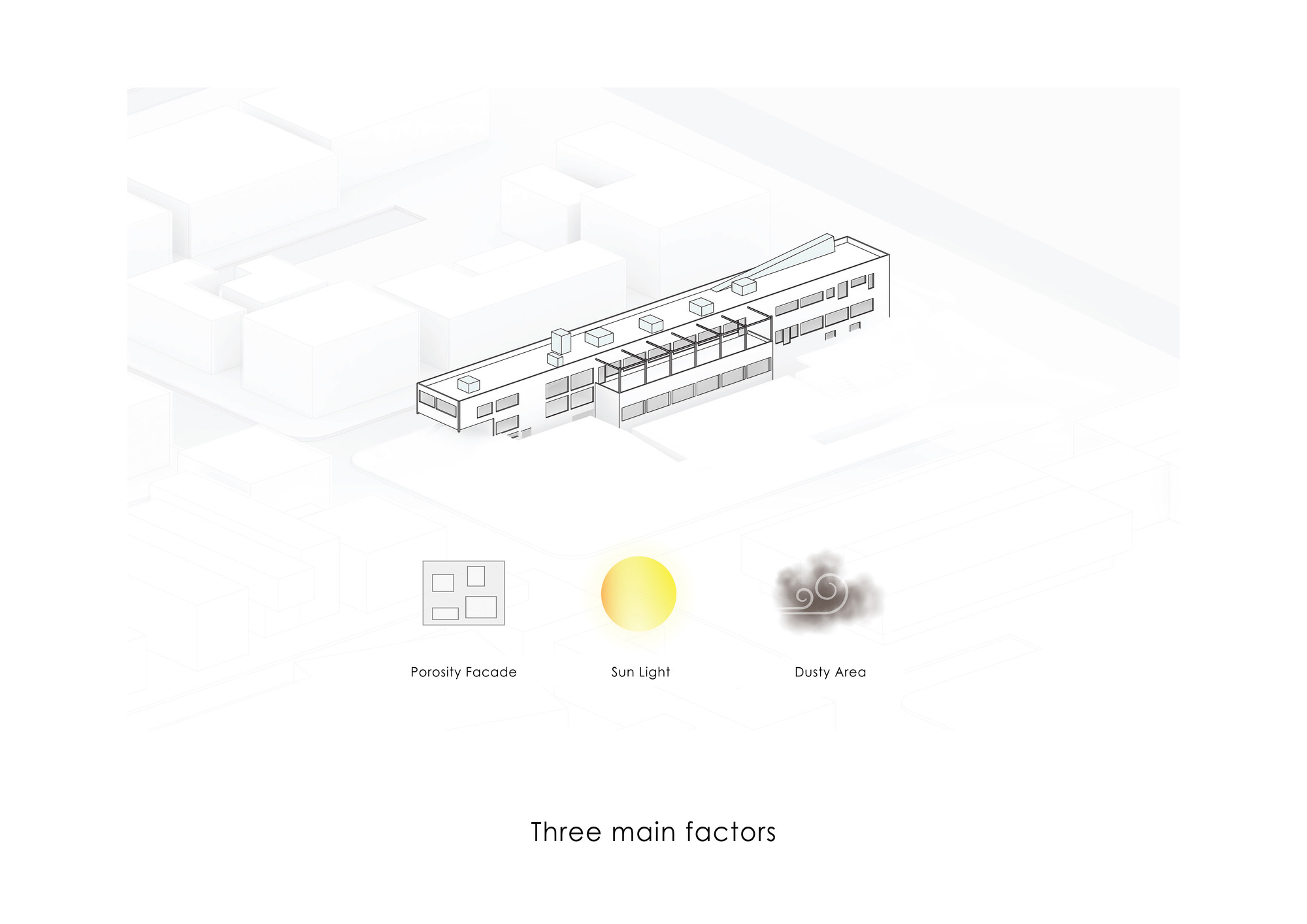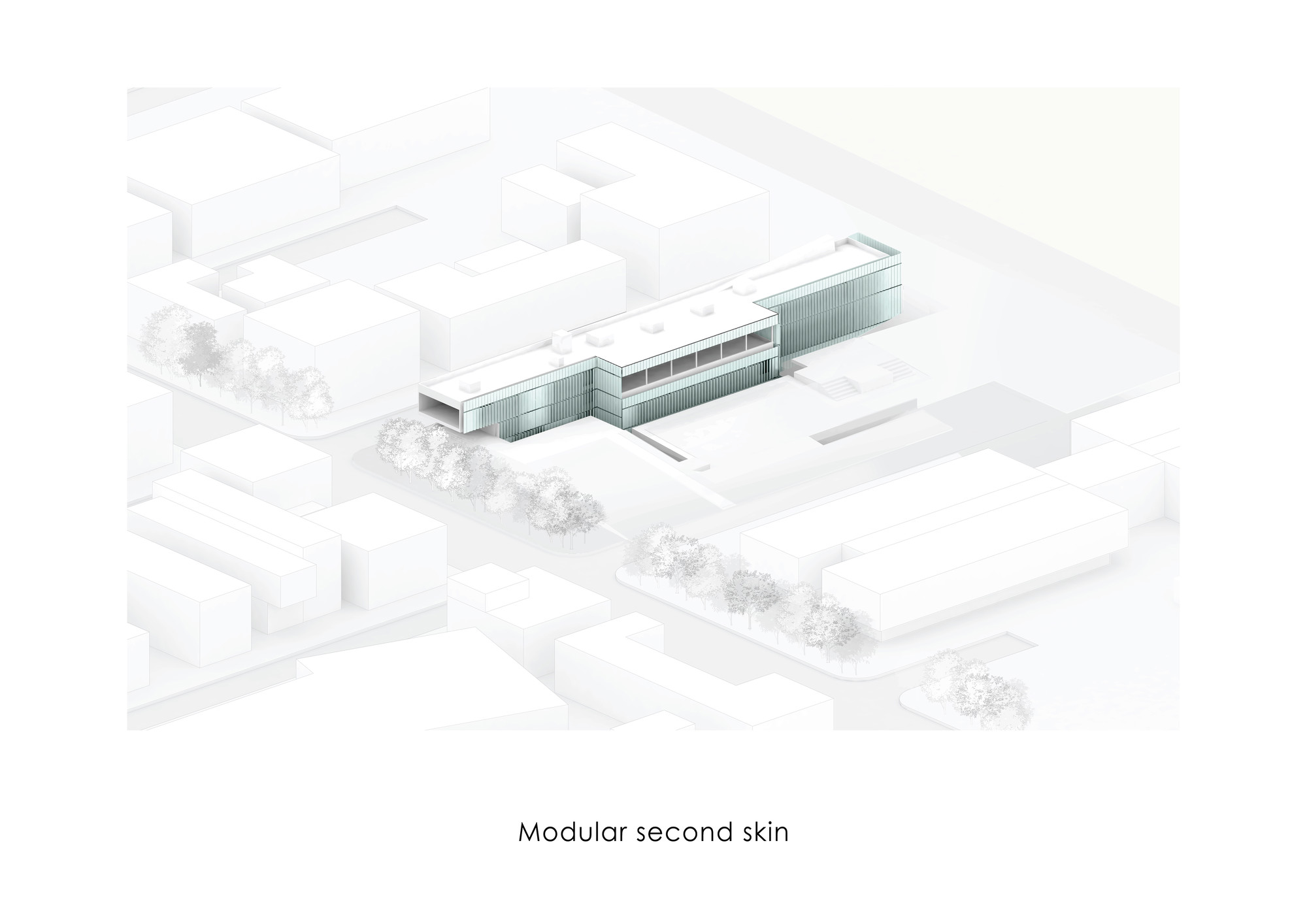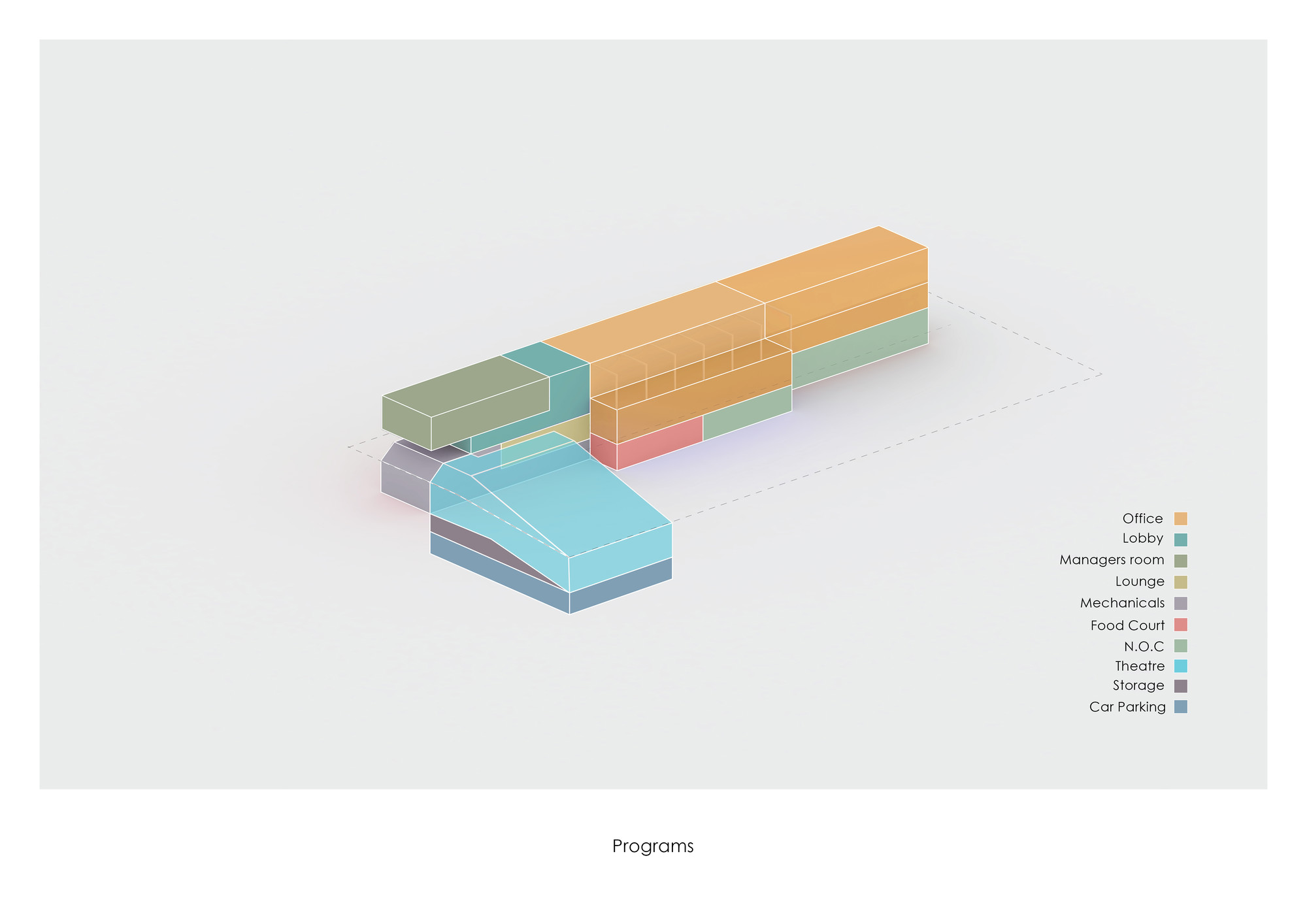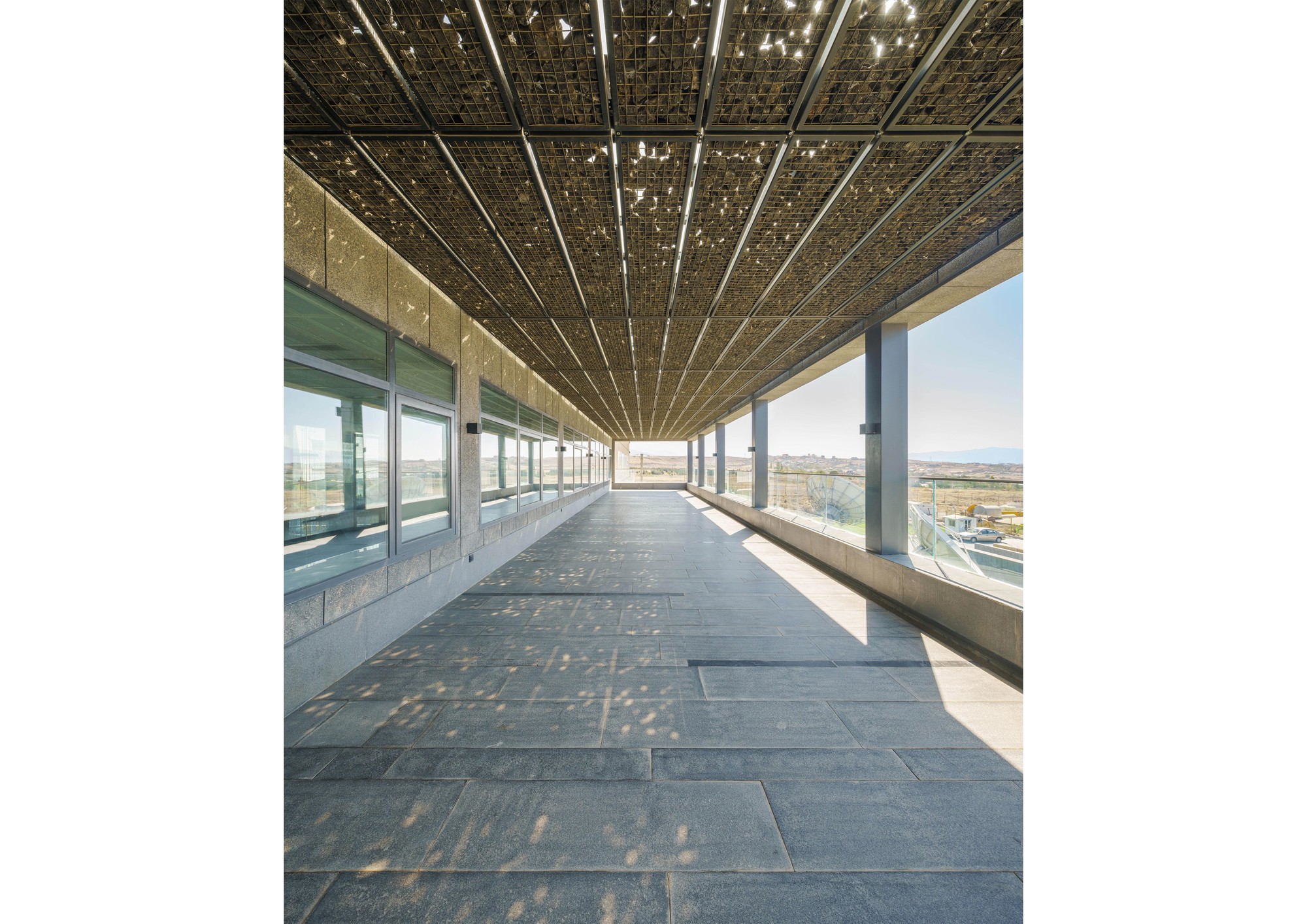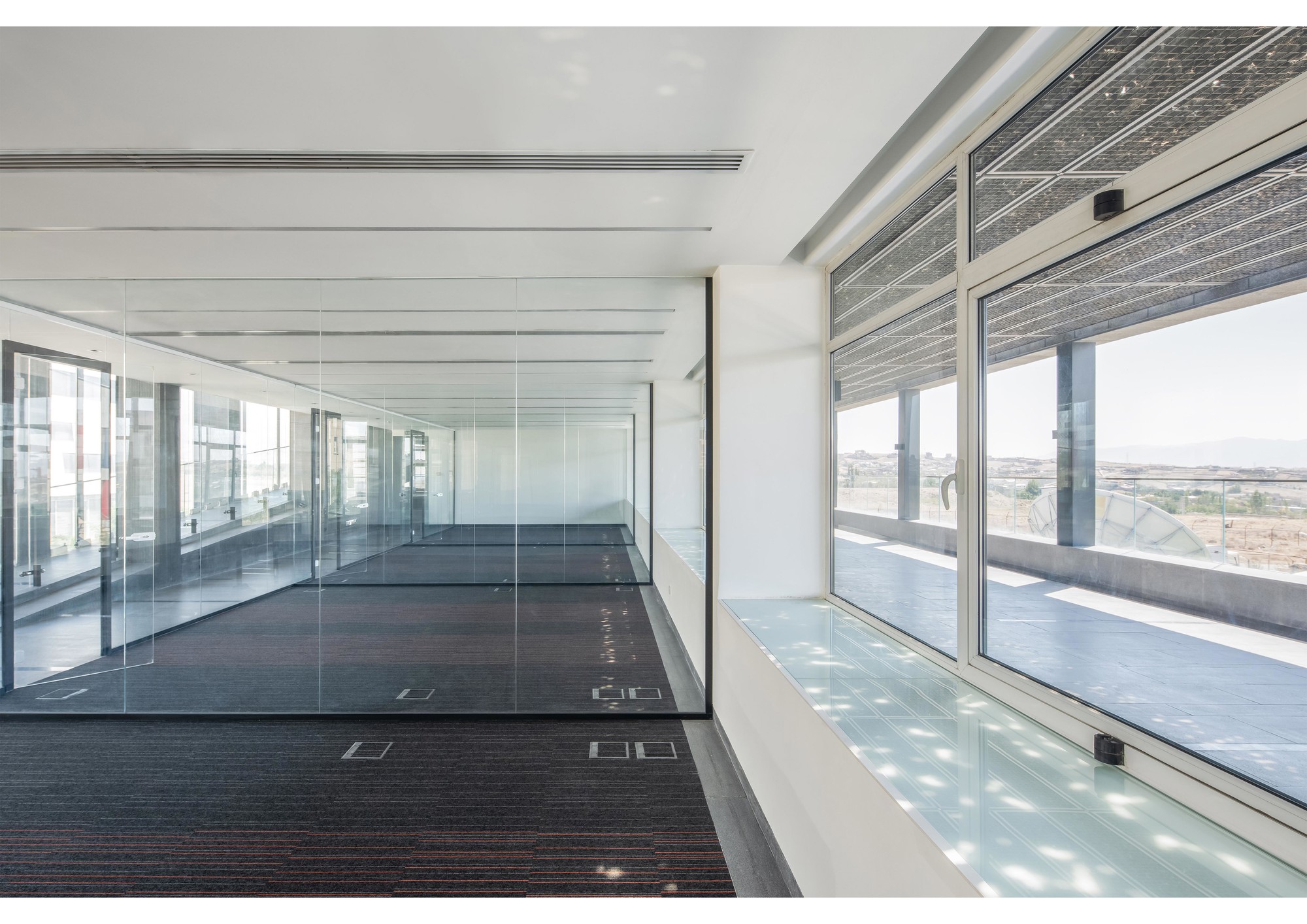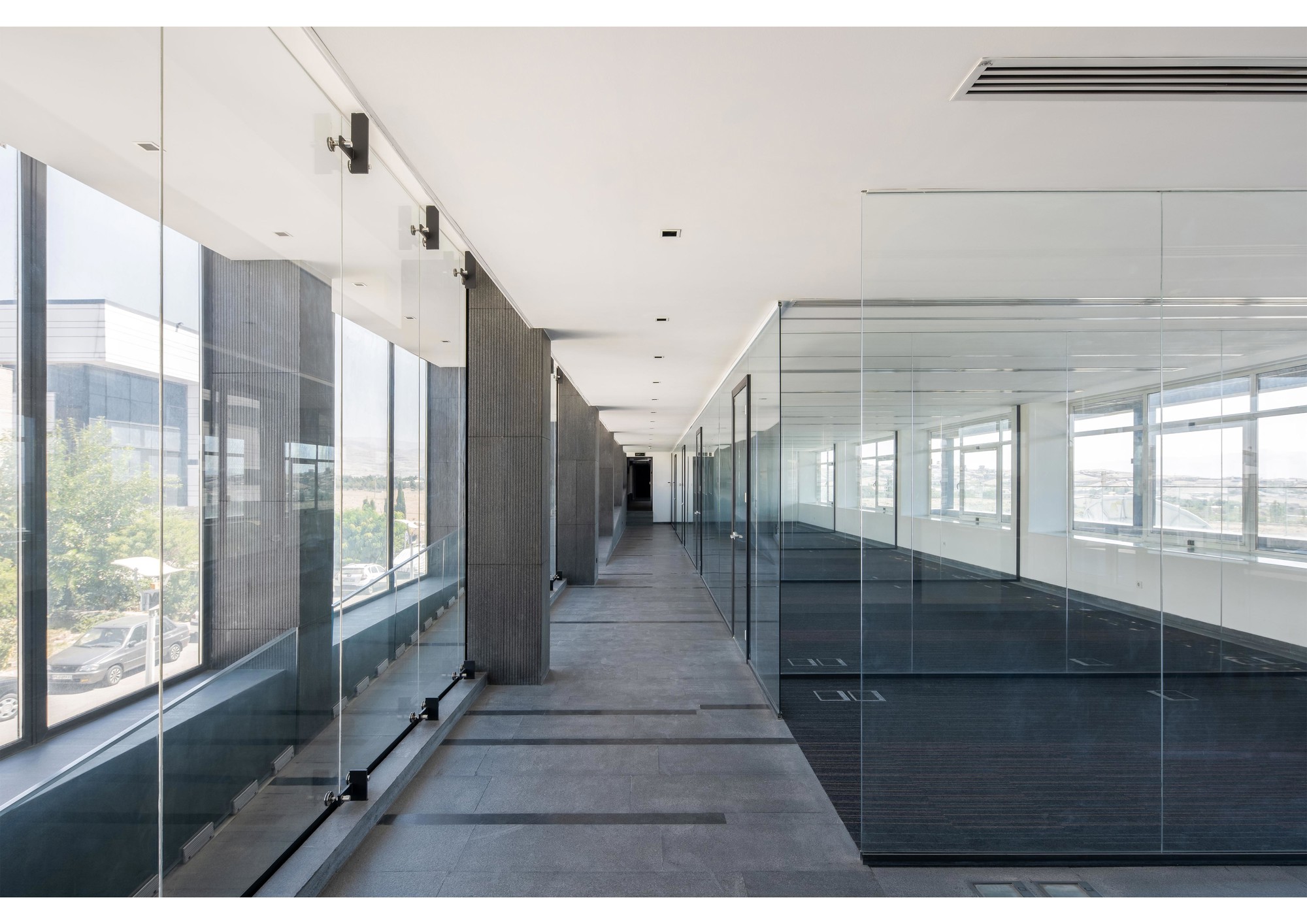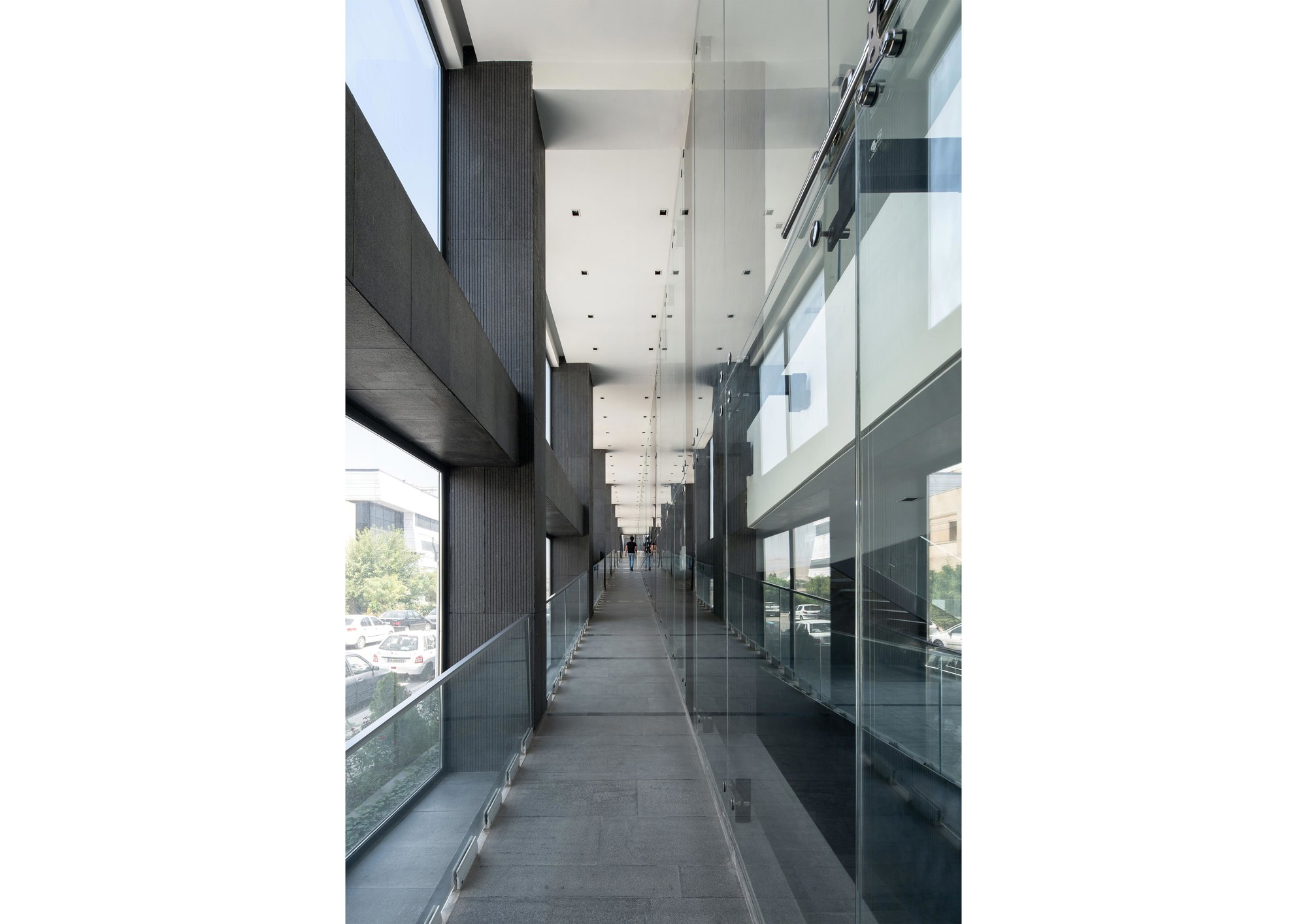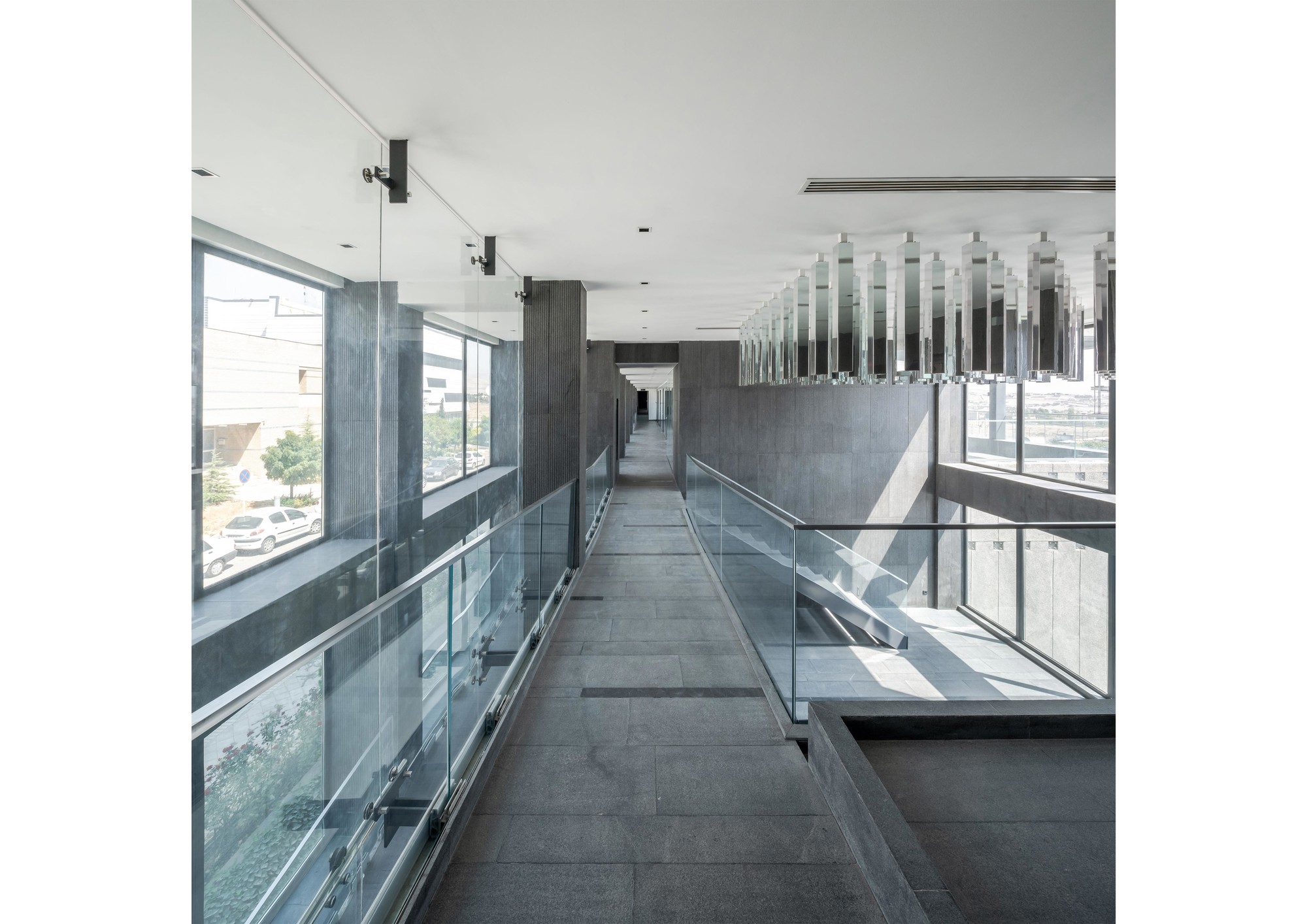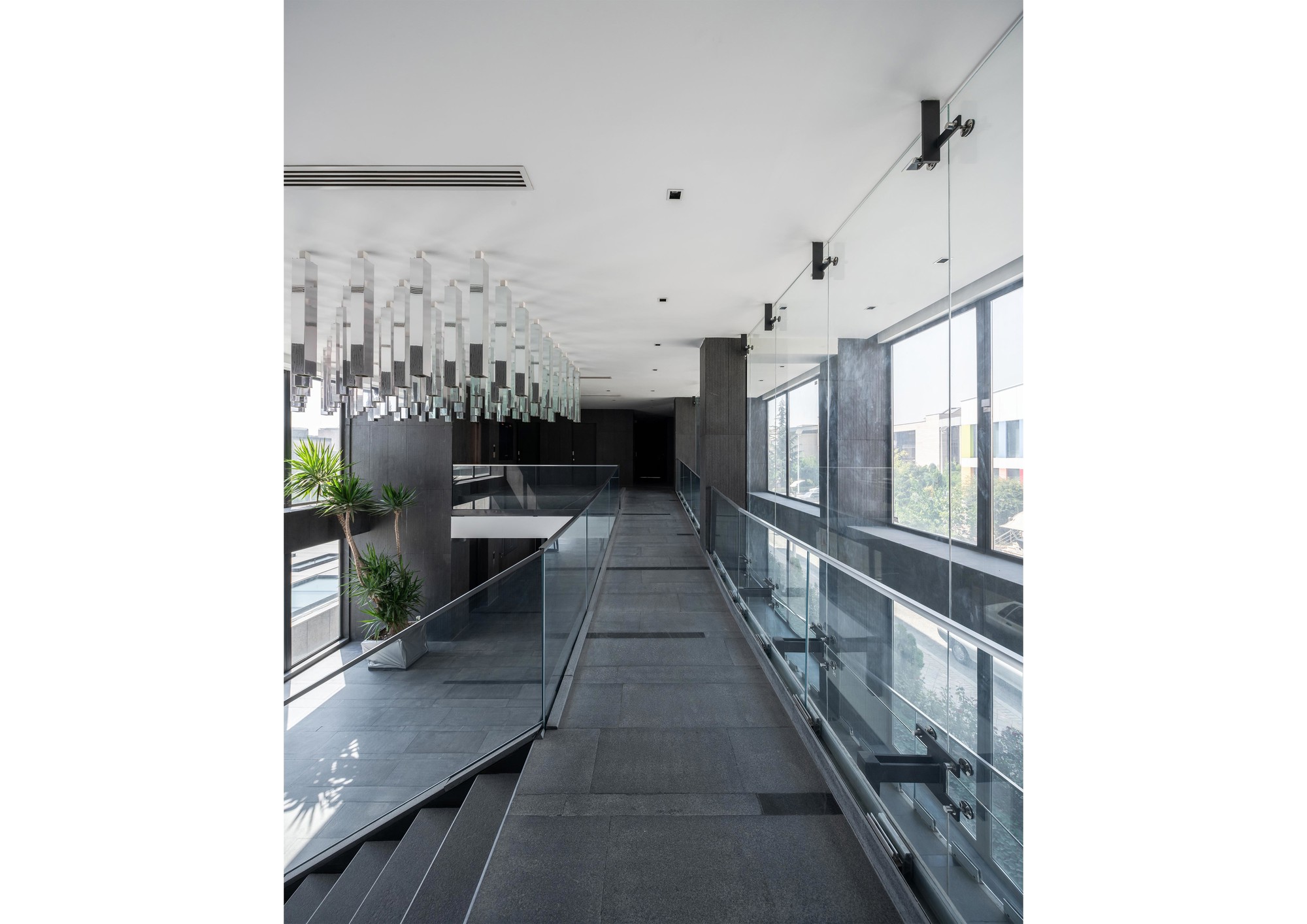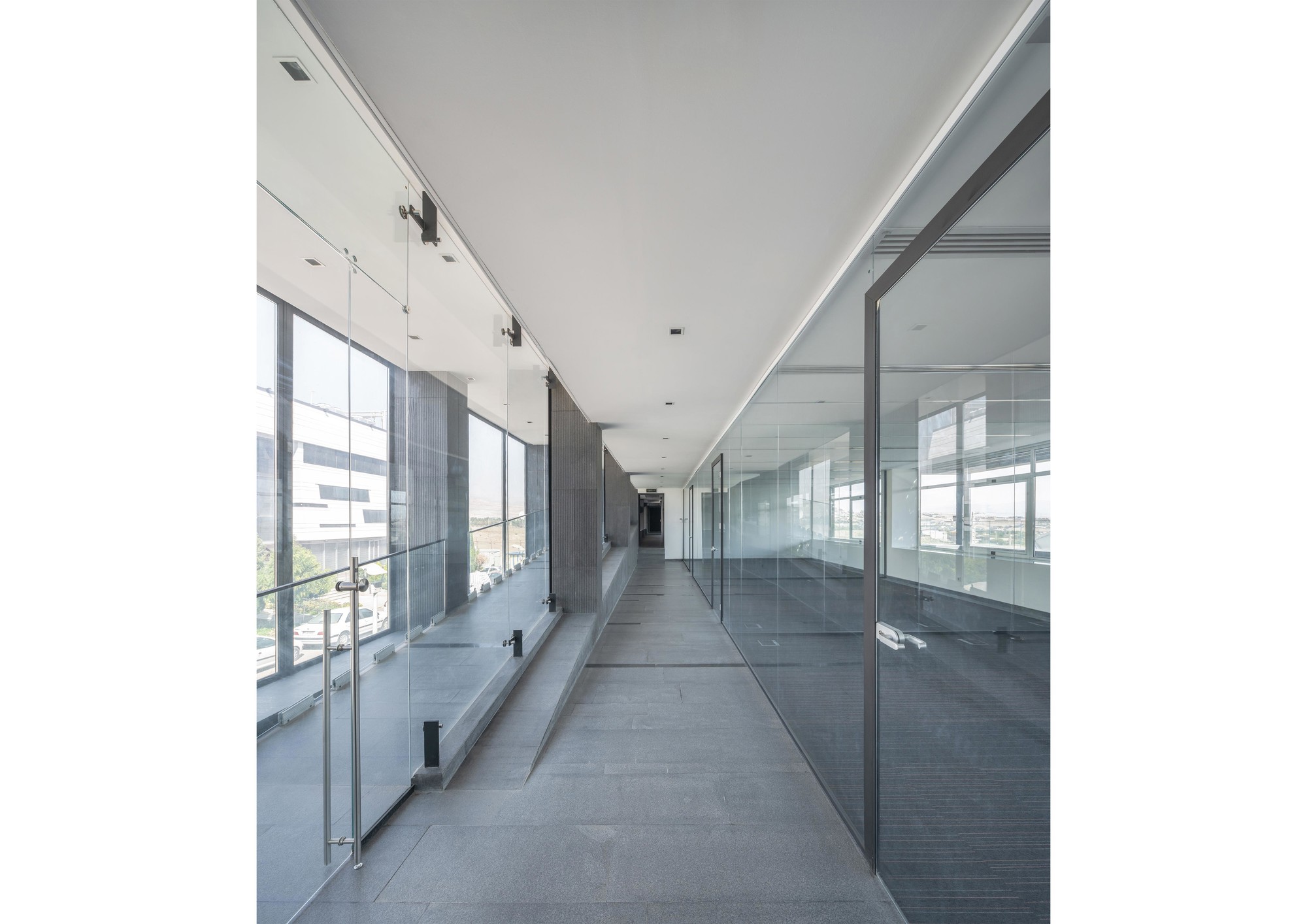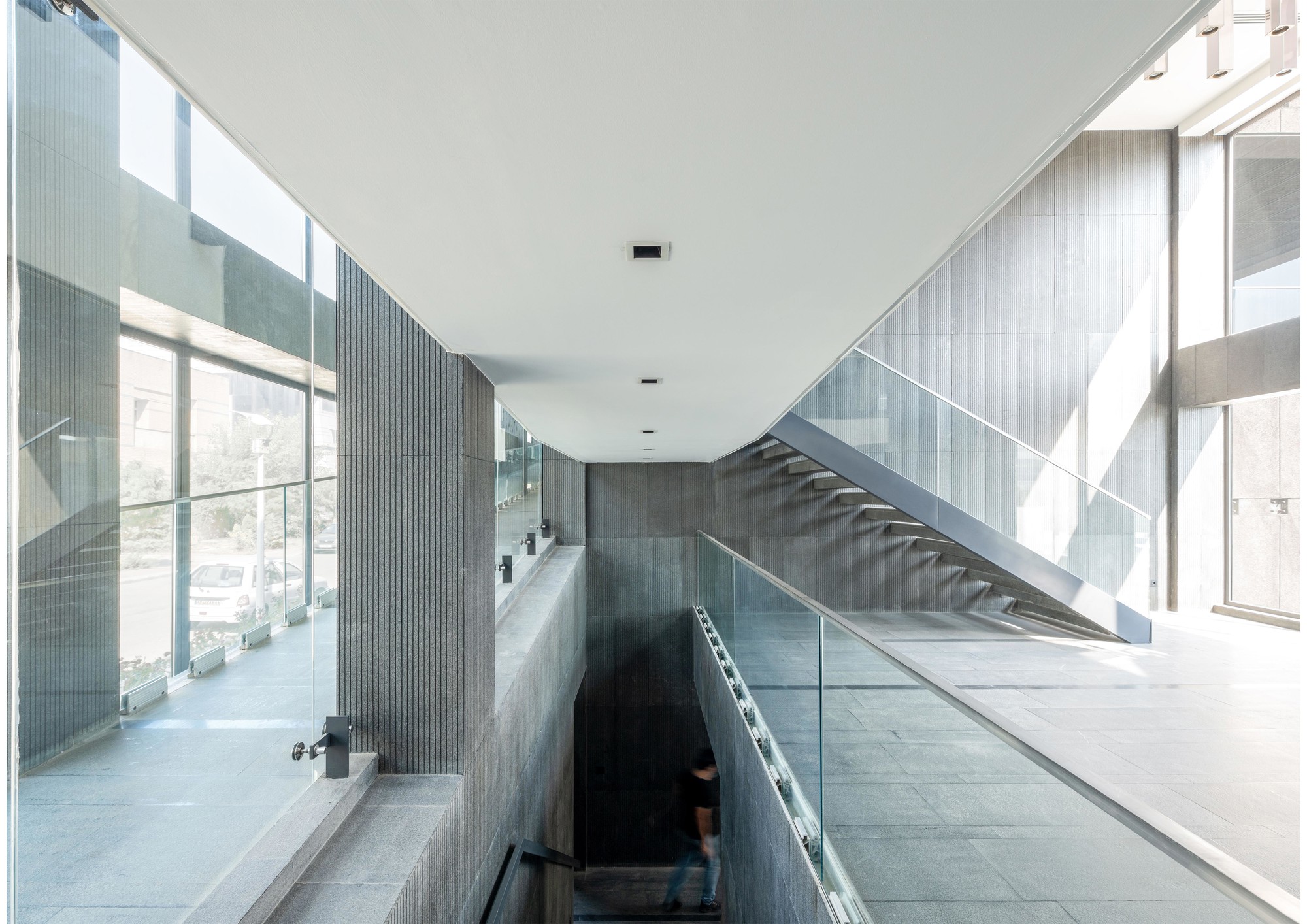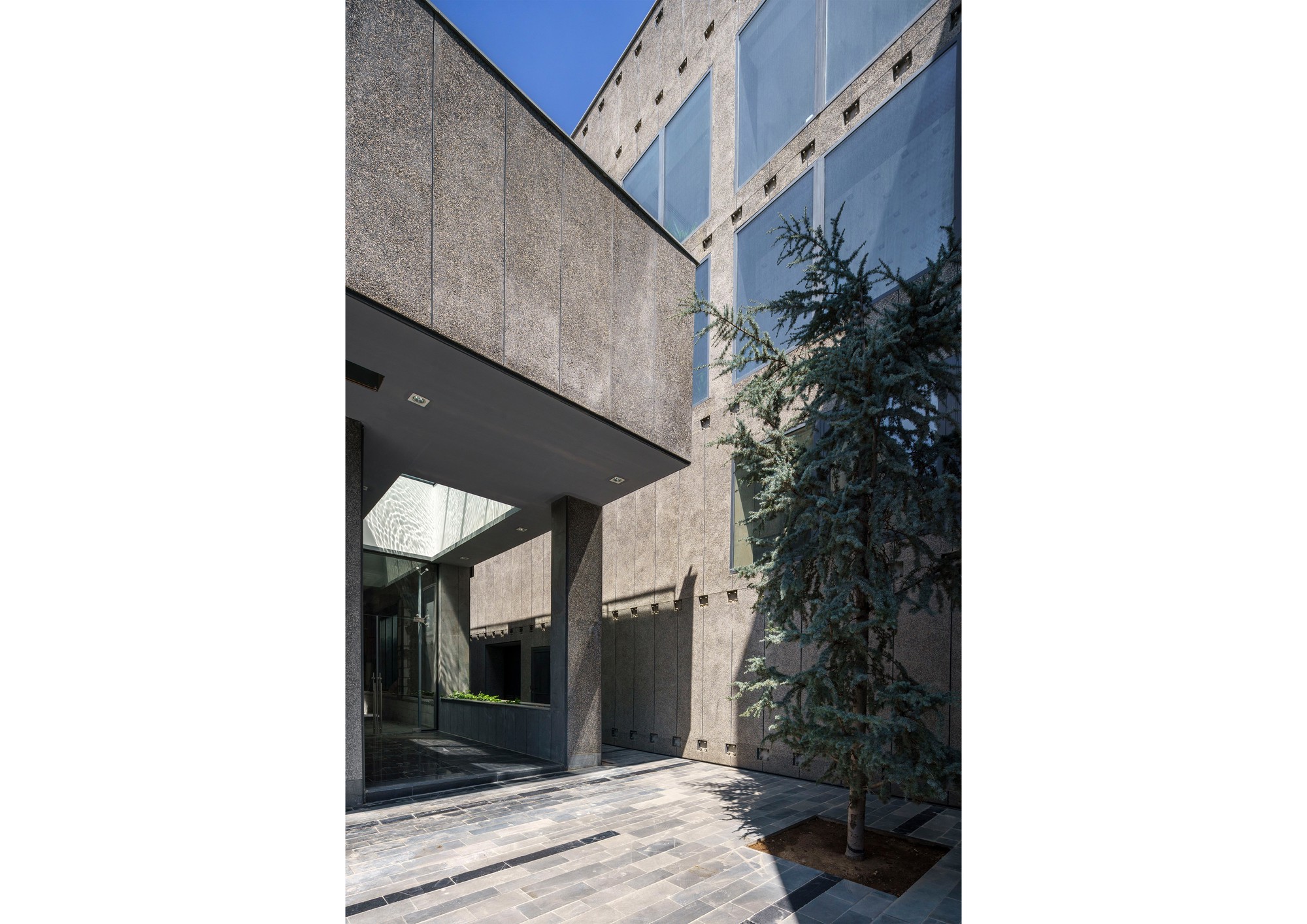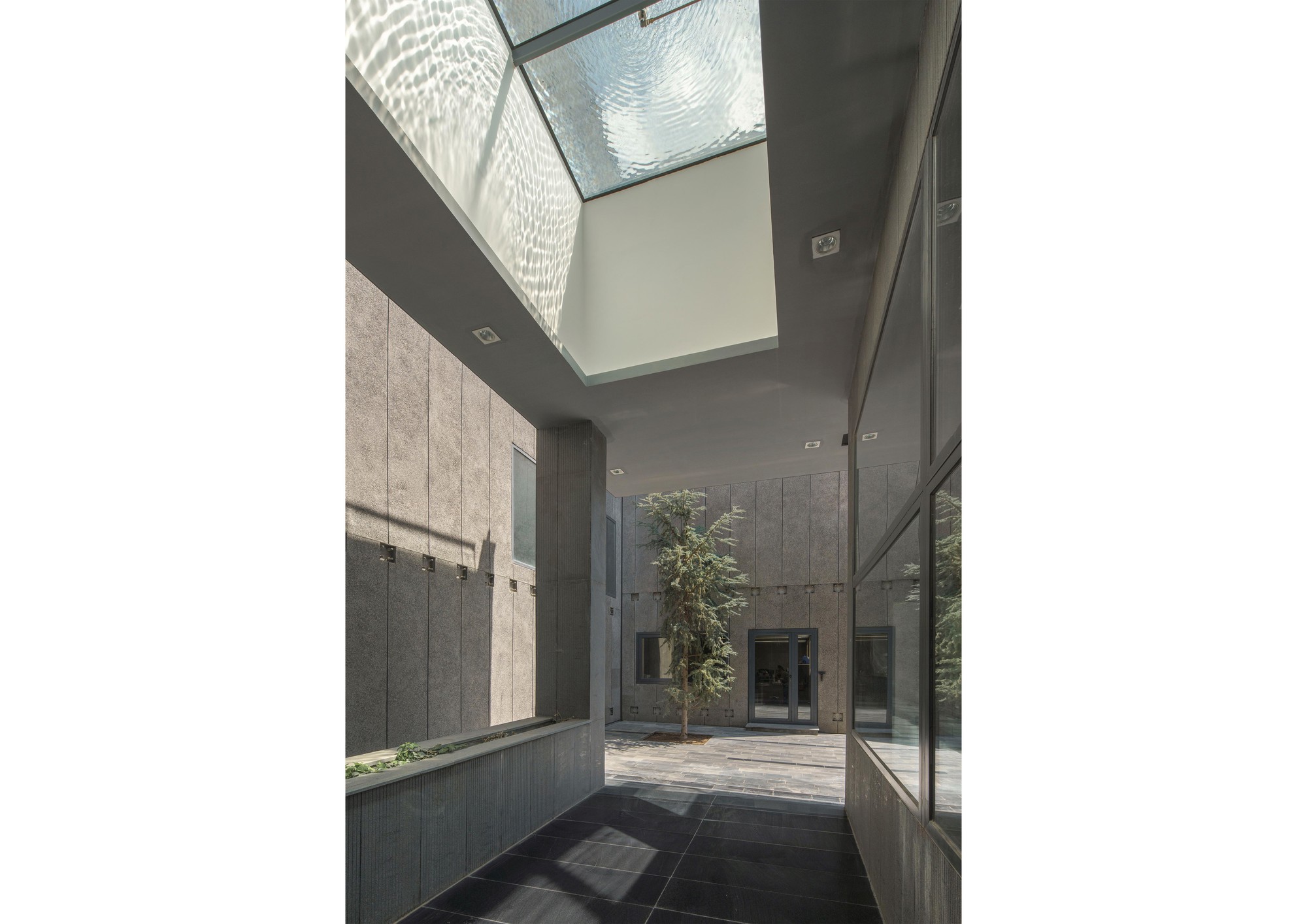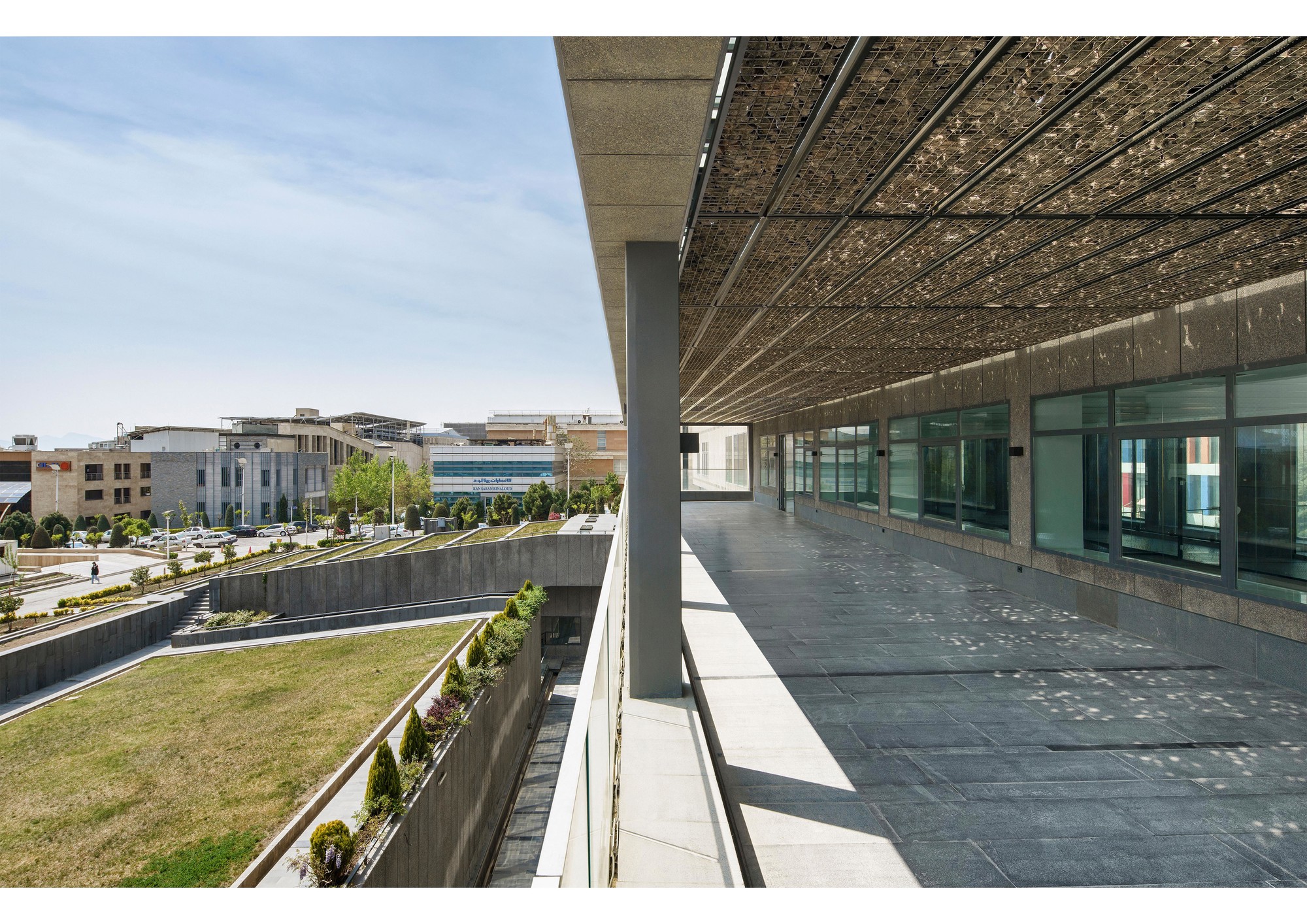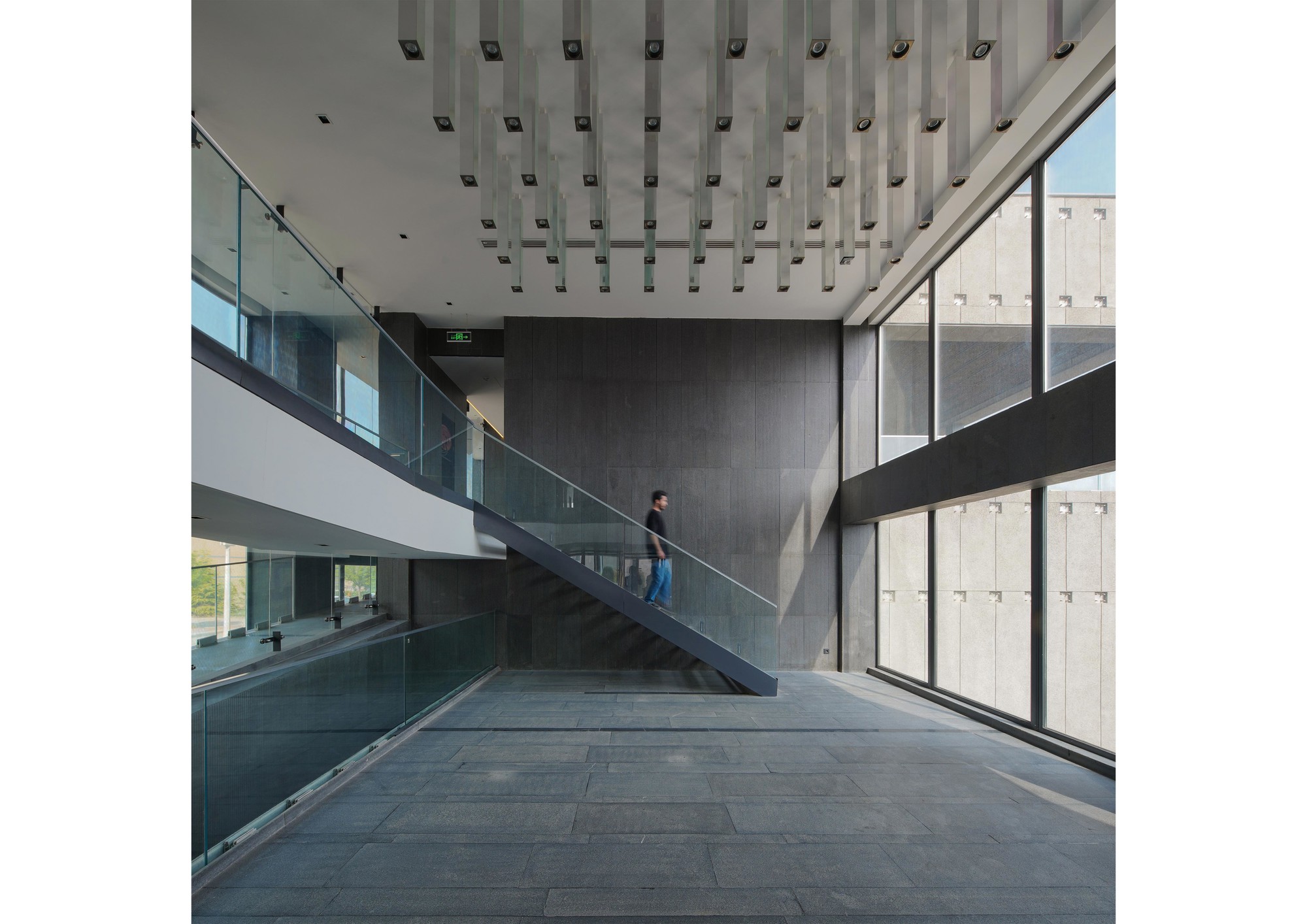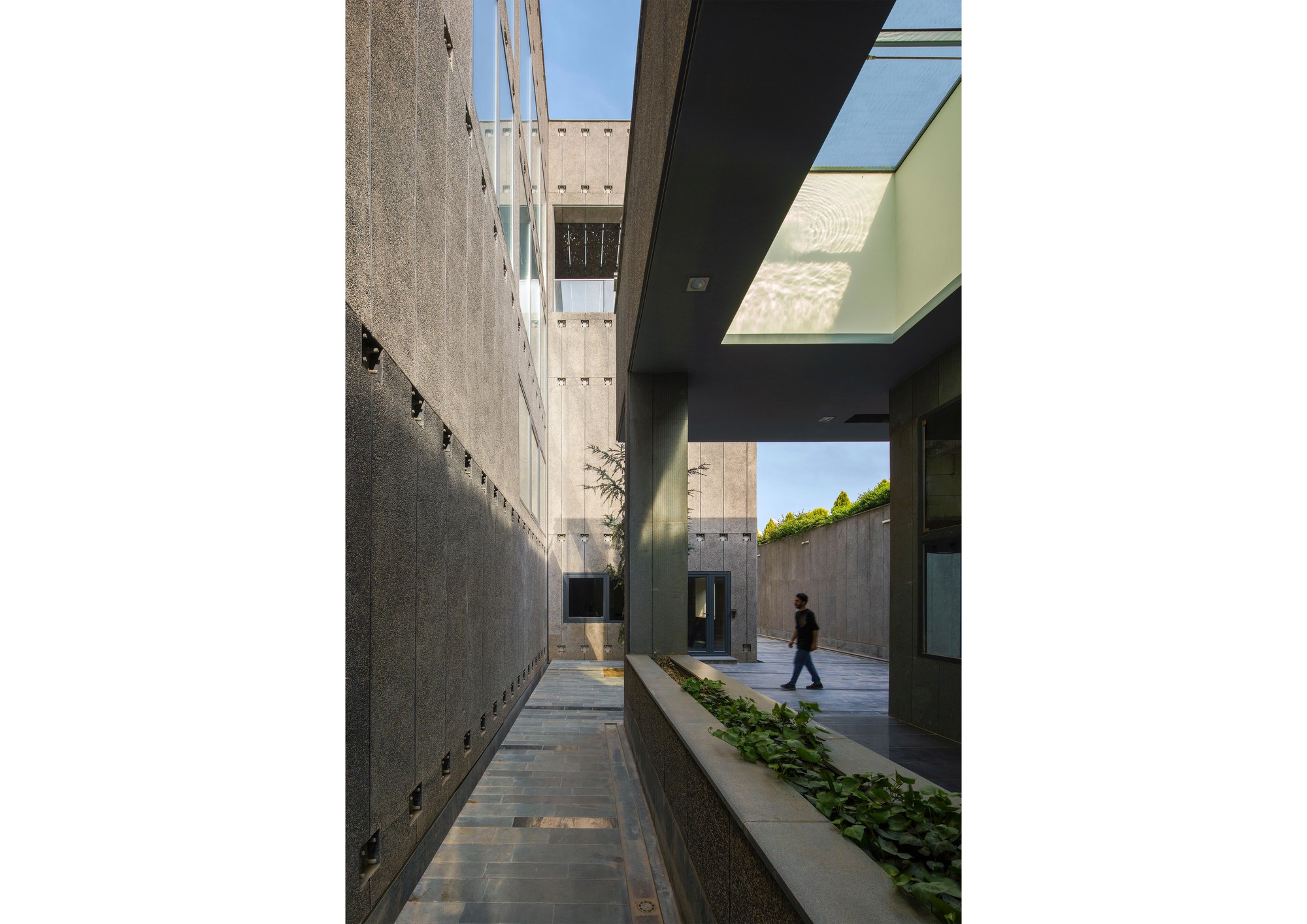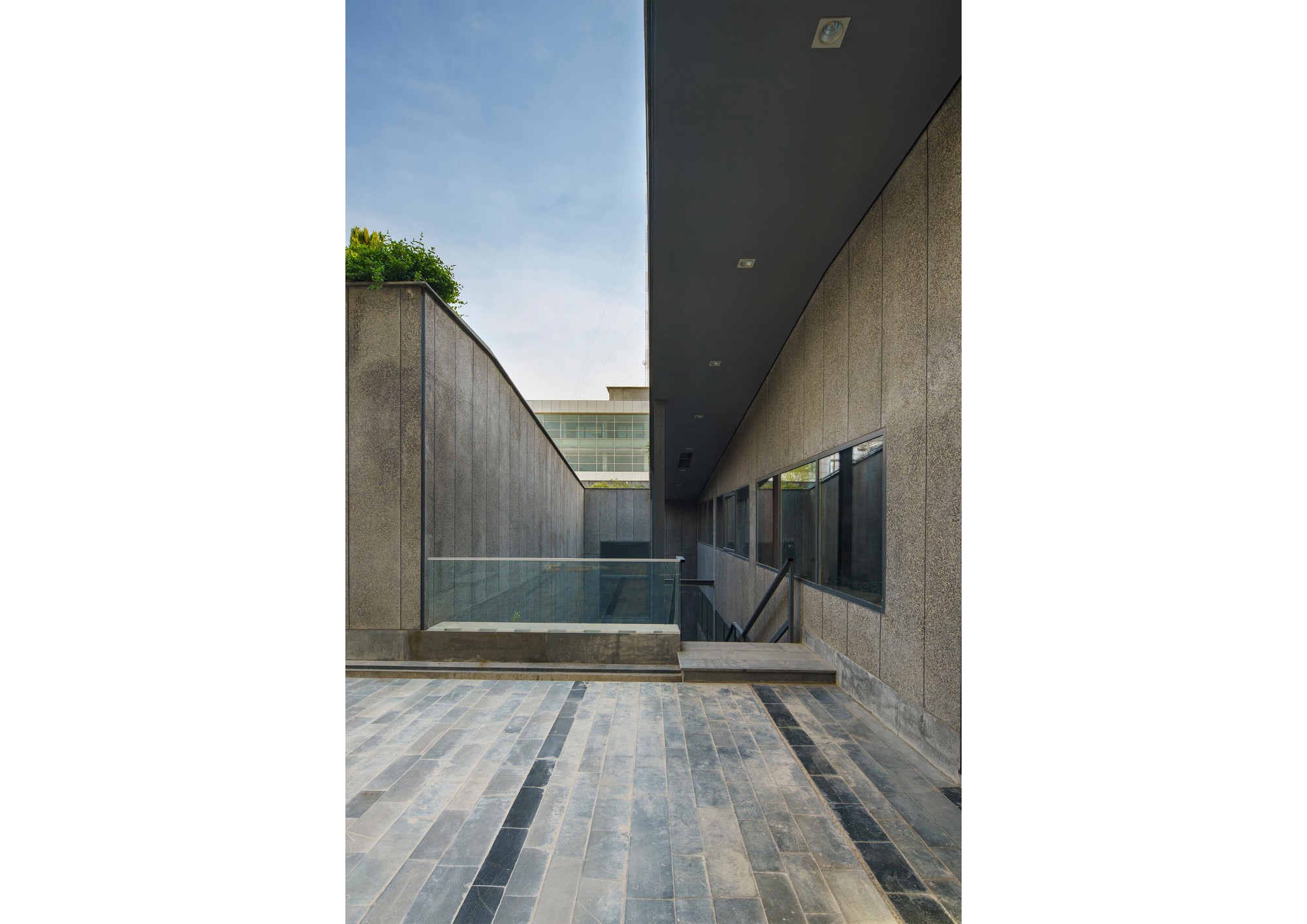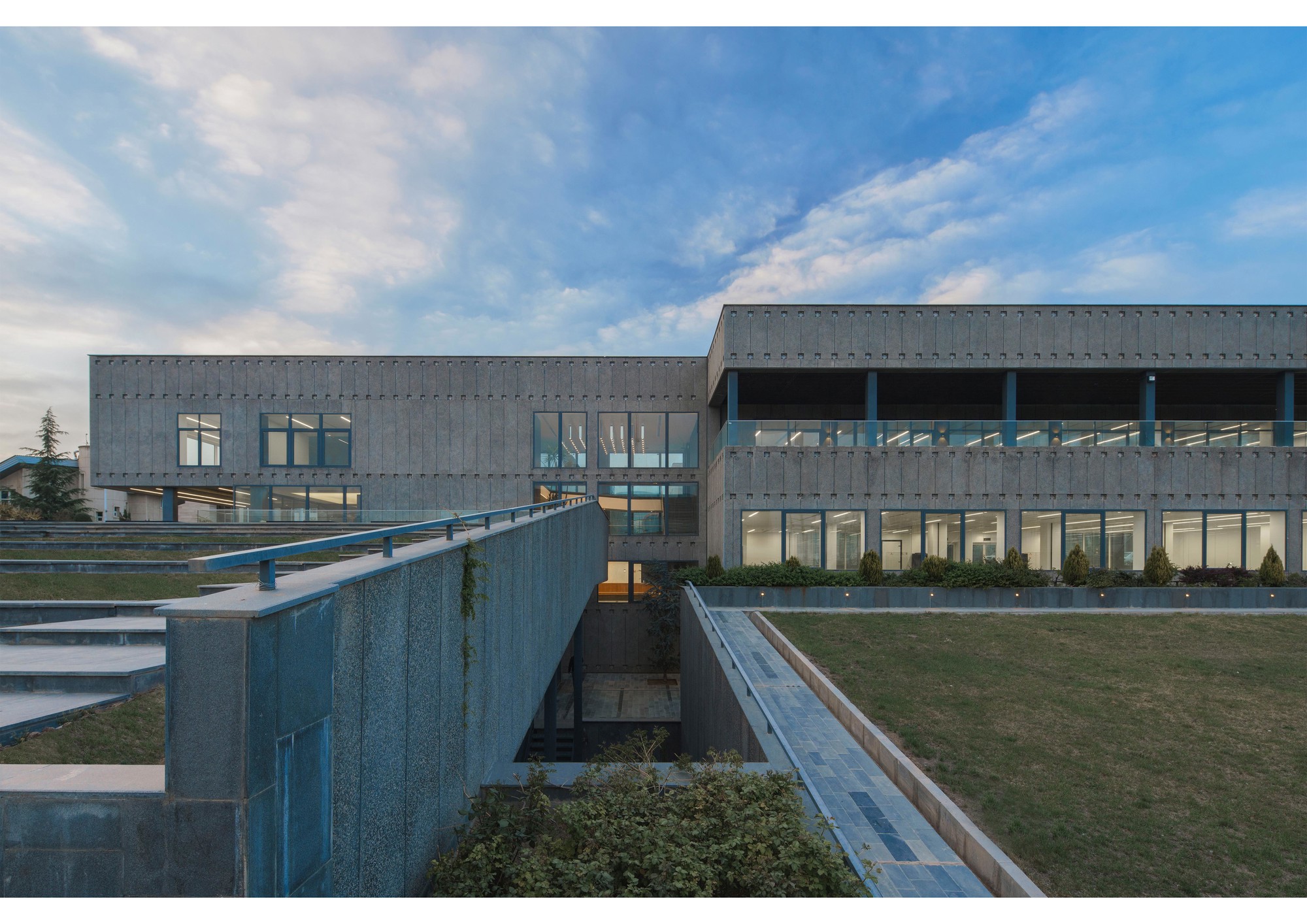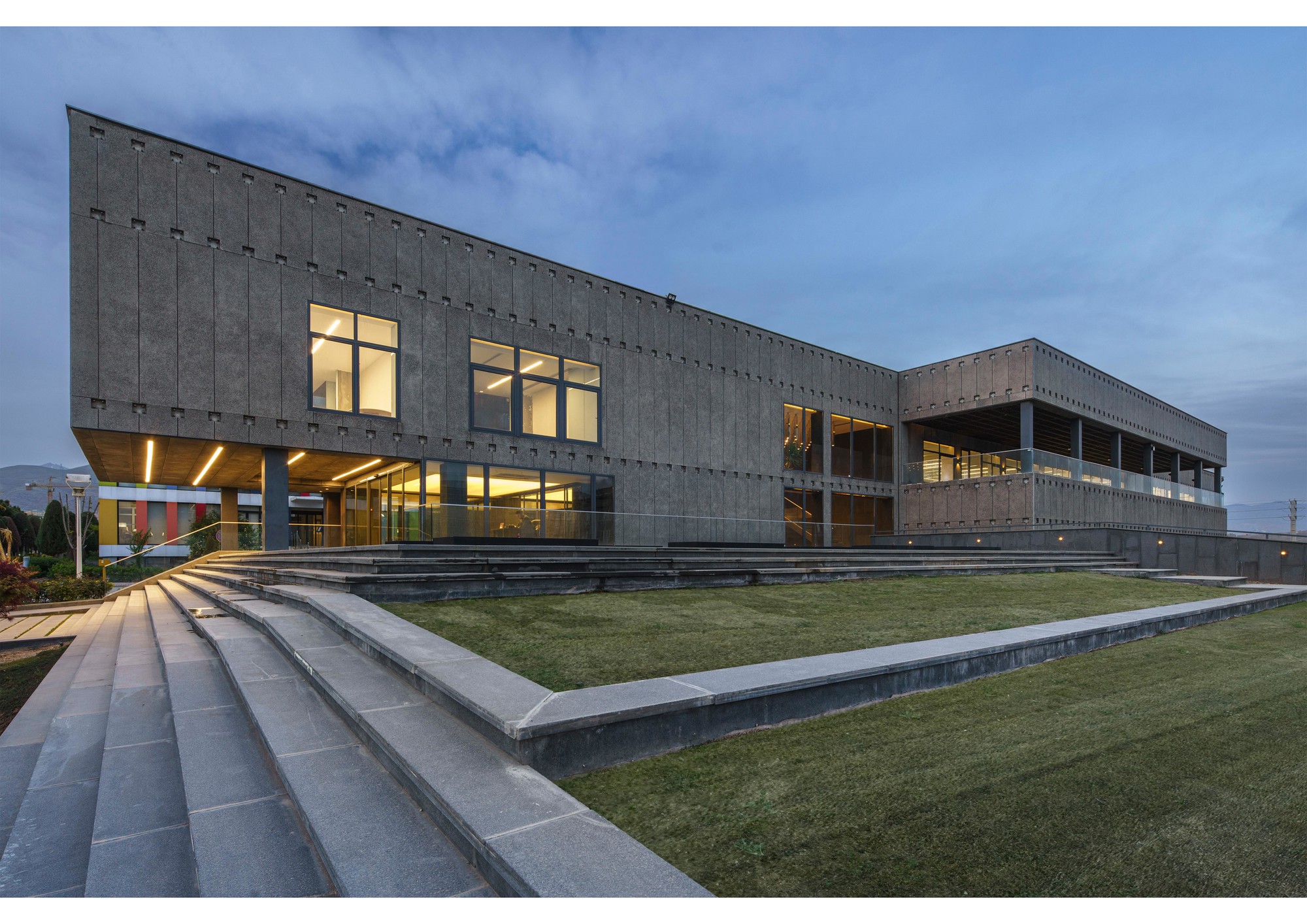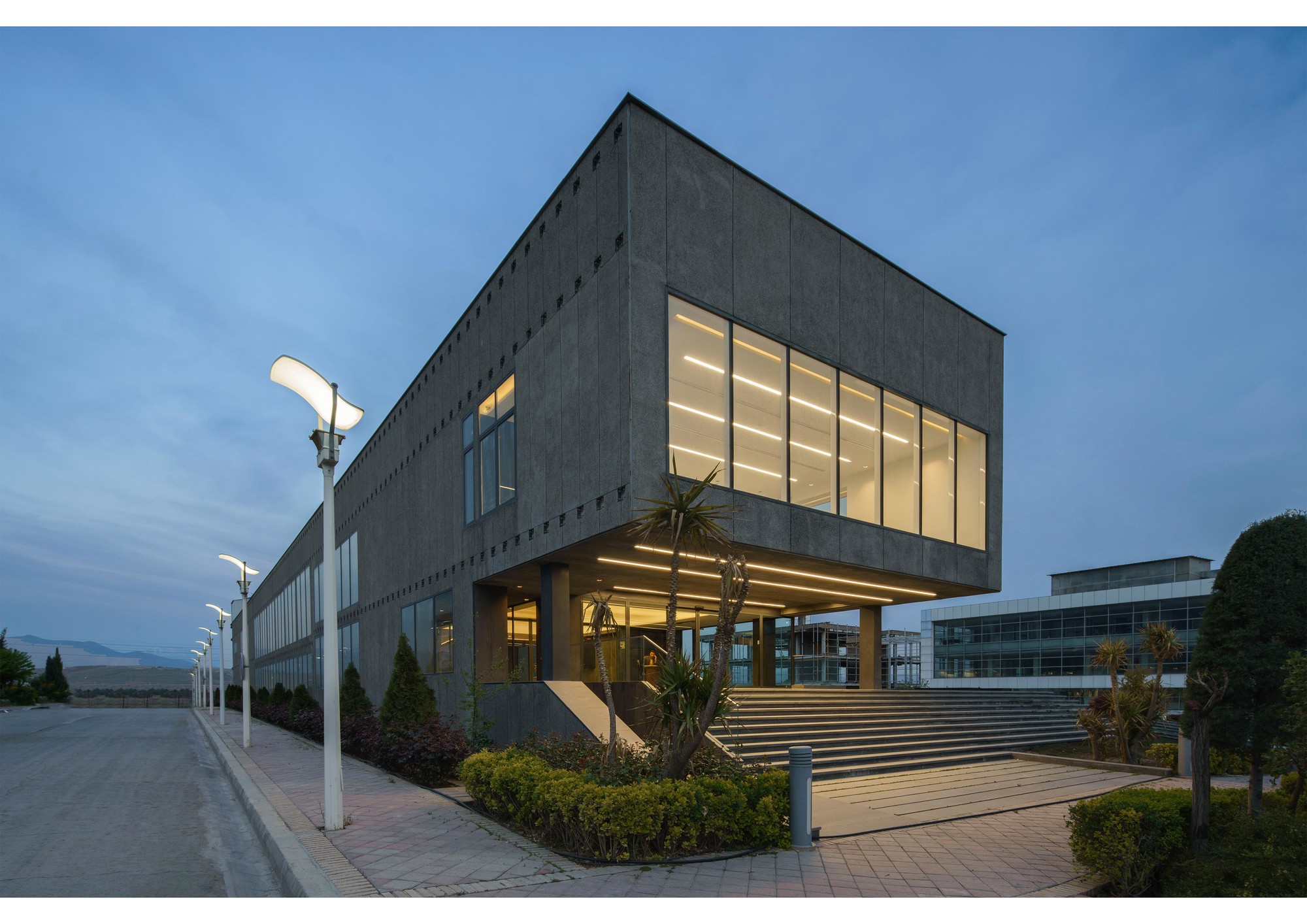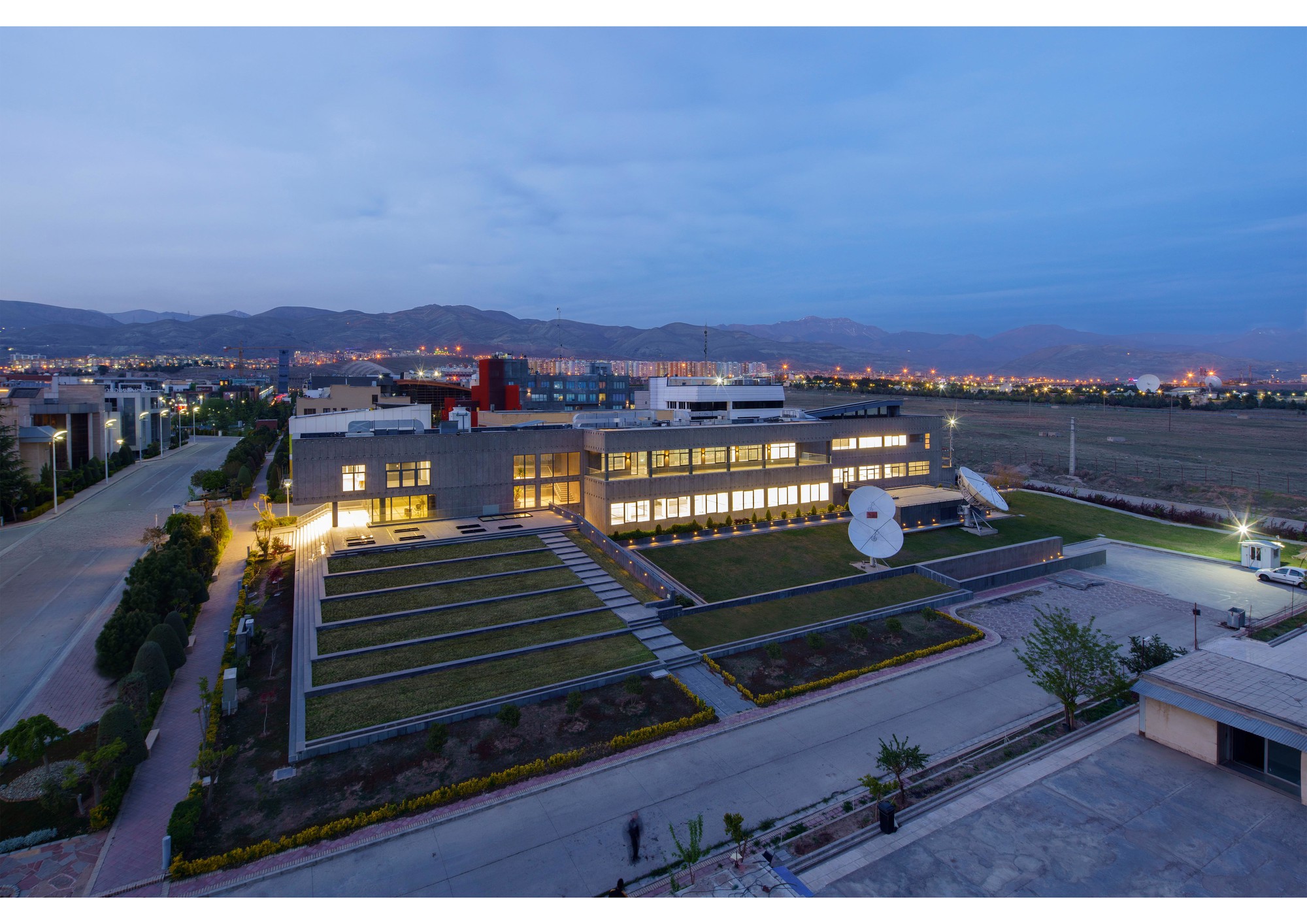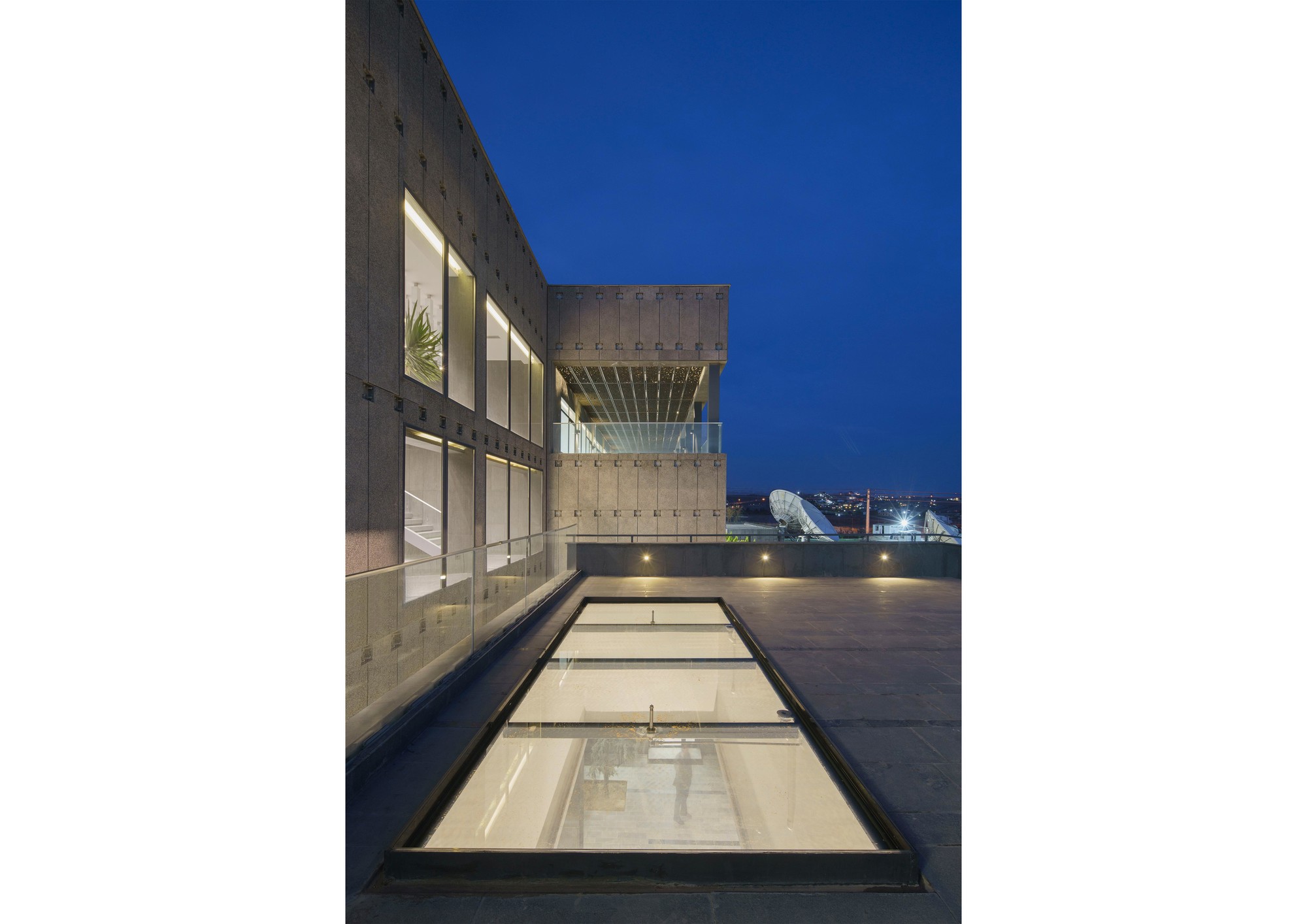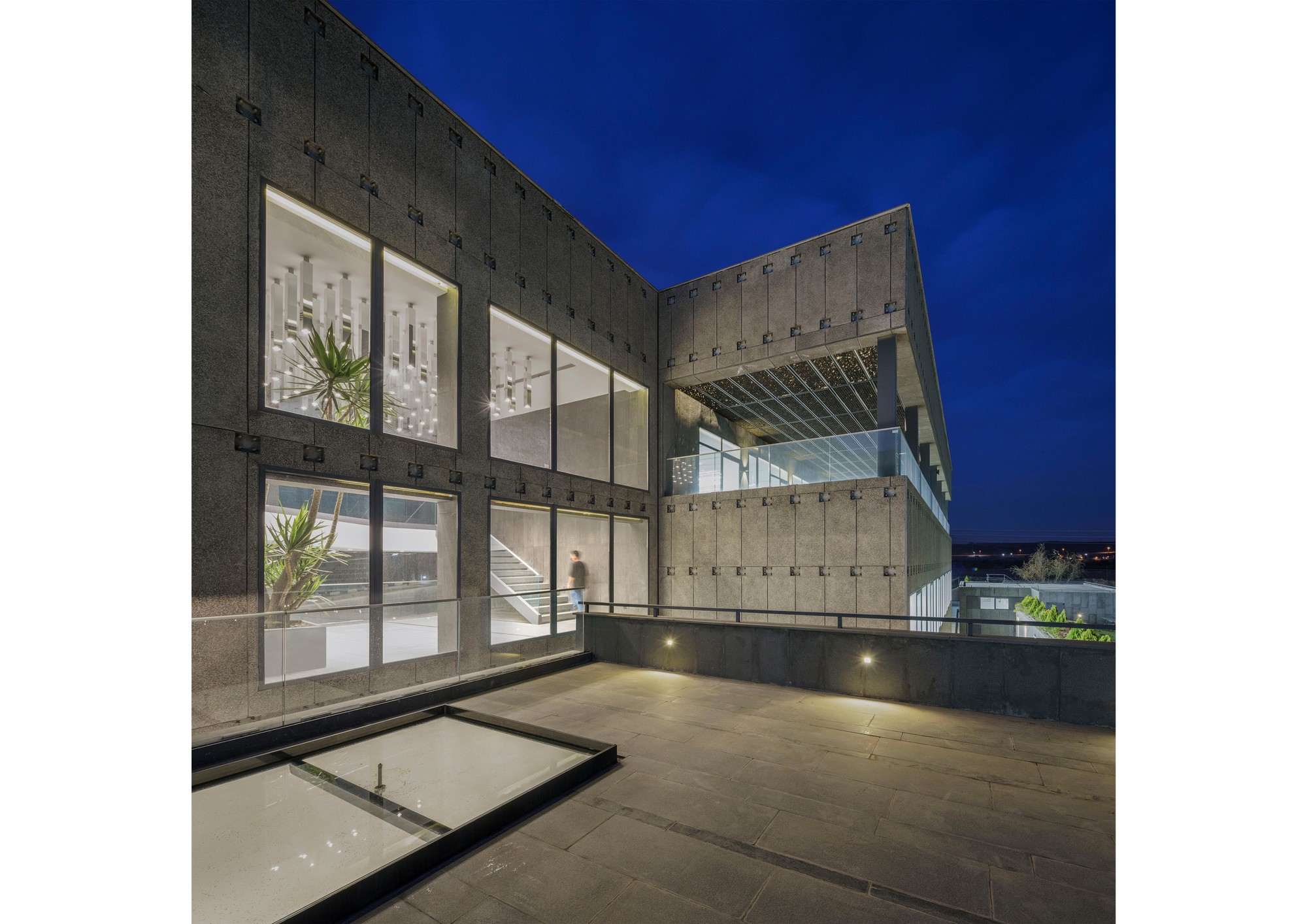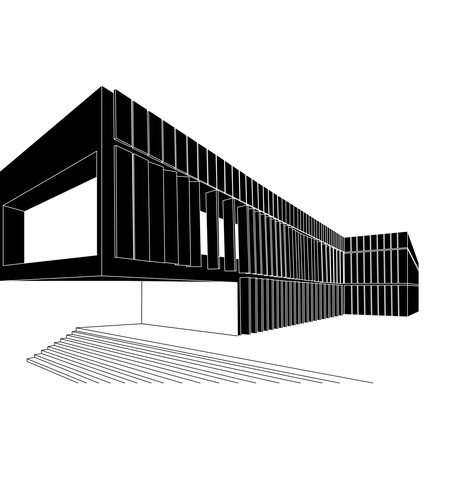

This project was initiated by the EBA[M] Office under the supervision of Mr. Arash Mozafari. Due to some technical issues EBA[M] was unable to continue the supervision of the construction process. Consequently, the built form departed significantly from the original design. HOOBA Team took on the project at this critical stage of the construction process. Considering factors such as: the non-consistent position of the windows, the need for controlling the amount of sunlight exposure, and the desire to form a volumetric consistency, it was decided to create a double layer enclosure for this building. Volcanic crushed stones were used in the form of Gabion panels to form the outer shell of the enclosure. Due to their porous texture, the volcanic stones of the Damavand region are significantly lighter than other stone types, making them an ideal choice for this project. The panels were implemented in different angles depending on weather there is a solid wall or an opening on the main facade. The sunlight penetration through the voids between the stones creates a pleasant atmosphere in the interior spaces. Same type of stone was used in the interior spaces to create harmony between the interior and the exterior of the project and a singular material was used to form the walls and the flooring. The main interior ramp is accompanied by a colored glass wall representing the organizational color of the company. The rest of the interior partitions are also made of opaque and transparent glasses to allow sunlight penetration inside the spaces. An adjoining volume was decided to be added to the building. This volume was formed underground providing the entire roof area available for satellite implementation. The surrounding landscape was integrated with the building to form a continuous whole and to maximize the viewing angles around the site. The assembly hall, the parking, and the storage are all parts of the underground space which is accessible using the lowered platforms called “Garden-Pit” in the Persian Architecture. These platforms also provide the required light and ventilation for the underground spaces.